


Listen to the article
Asian Markets React as Oil Prices Resume Climb After Brief Respite
Asian shares showed mixed performance on Tuesday as oil prices rebounded after a temporary dip that had helped U.S. markets post their best day since the outbreak of hostilities in Iran.
Brent crude climbed nearly 3% early Tuesday to $103.17 a barrel, while U.S. benchmark crude rose to $96.20, erasing Monday’s brief decline to around $93. The renewed pressure on oil prices dampened U.S. futures, with contracts for the S&P 500 and Dow Jones Industrial Average both down 0.3%.
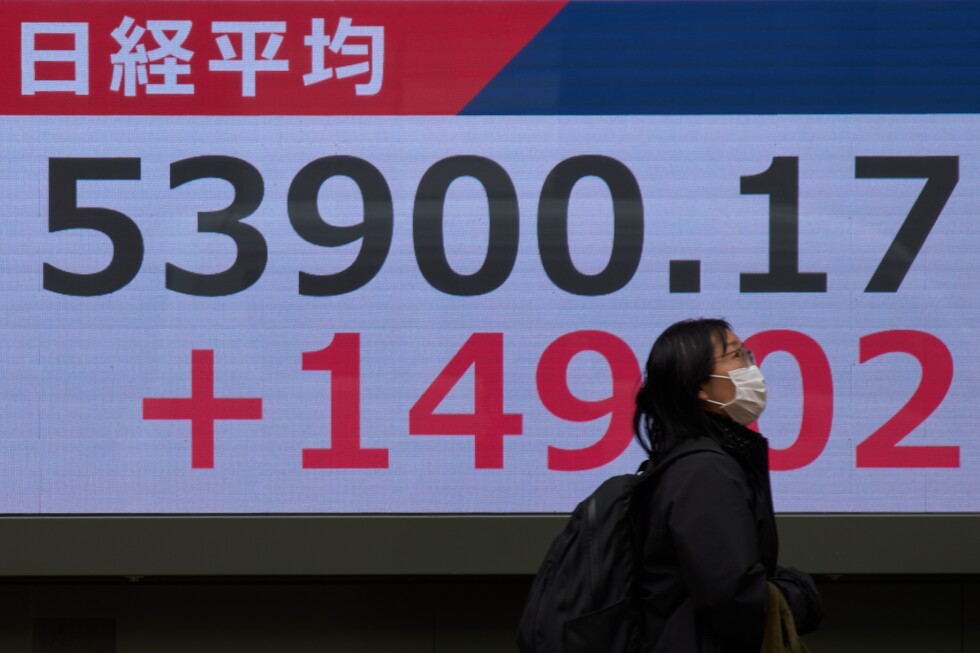
Across Asian markets, performance varied significantly. Japan’s Nikkei 225 gained 0.4% to 53,928.25, while South Korea’s Kospi demonstrated robust growth, jumping 2.4% to 5,683.61. Hong Kong’s Hang Seng surged 1% to 26,088.07, as the Shanghai Composite index remained relatively flat, edging less than 0.1% lower to 4,083.03.
In Australia, the S&P/ASX 200 advanced 0.3% to 8,606.60 following the Reserve Bank of Australia’s decision to raise its benchmark interest rate to 4.1% from 3.85%. The central bank cited higher fuel prices as a key factor in its first rate hike since November 2023.
Other regional markets also showed positive momentum, with Taiwan’s Taiex rising 1.4% and India’s Sensex posting a modest 0.1% gain.
The market’s primary concern remains focused on the situation in the Middle East. The closure of the strategically vital Strait of Hormuz—through which approximately one-fifth of the world’s oil typically flows from the Persian Gulf—has severely disrupted global oil supply chains. Iran has significantly reduced traffic through this crucial waterway in response to military actions by the United States and Israel.
“The panic is still there, just dialled down a notch as crude slipped off the boil. Brent easing back toward $100 flipped the tape from bunker mentality to opportunistic risk-taking in a heartbeat,” noted Stephen Innes of SPI Asset Management.
The conflict continues to escalate as the U.S. and Israel maintain their bombardment of what they describe as military targets in Iran’s capital. Meanwhile, Israel has intensified its campaign against Iran-backed militants in Lebanon, causing massive displacement—more than one million people, representing roughly 20% of Lebanon’s population—as UN peacekeepers report Israeli ground troops massing along the border.
Over the weekend, President Donald Trump demanded that countries affected by the Strait of Hormuz closure “take care of that passage,” pledging that the United States “will help – A LOT!”
The ongoing uncertainty surrounding the scope and duration of the conflict has contributed to market volatility since hostilities began just over two weeks ago. However, historical patterns suggest markets typically recover relatively quickly from military conflicts, provided oil prices don’t remain elevated for extended periods. This historical resilience has helped maintain U.S. stock prices near record levels despite current tensions.
Monday saw the S&P 500 climb 1% to 6,698.38, marking its largest gain in five weeks. The Dow Jones Industrial Average added 0.8% to 46,946.41, while the Nasdaq composite jumped 1.2% to 22,374.18.
The financial market’s principal concern is that prolonged closure of the strait could restrict oil supplies sufficiently to drive inflation to levels that could seriously hamper global economic growth. This complicates the Federal Reserve’s challenge of balancing growth and inflation, particularly as President Trump continues to advocate for interest rate cuts.
Despite these pressures, traders do not expect the Fed to reduce rates at its policy meeting concluding Wednesday.
In the technology sector, Nvidia rose 1.6% on Monday after CEO Jensen Huang discussed AI’s potential at a conference, projecting $1 trillion in demand for AI chips through 2027. The company’s positive performance provided significant support to the S&P 500.
In currency markets early Tuesday, the U.S. dollar strengthened against the Japanese yen, rising to 159.32 from 159.05, while the euro slipped slightly to $1.1496 from $1.1507.
Fact Checker
Verify the accuracy of this article using The Disinformation Commission analysis and real-time sources.

20 Comments
The renewed strength in oil prices is certainly a double-edged sword. While it may benefit some sectors, it also poses challenges for consumers and industries that rely on energy inputs. Navigating these dynamics will be crucial.
That’s a fair assessment. The impact of oil price fluctuations is often multifaceted, and finding the right balance will be key for policymakers and businesses alike.
It’s interesting to see the varied performance across the Asian markets in response to the oil price movements. This underscores the need for a nuanced, regional analysis when assessing the potential impacts on different economies and industries.
Agreed. The diverse reactions highlight how local conditions and policy responses can shape the market dynamics, even within a broader regional context.
The Reserve Bank of Australia’s rate hike in response to rising fuel prices is an interesting move. It will be worth watching how other central banks navigate the tricky balance between inflation and growth.
Good point. Central bank policy will be crucial in determining how these market dynamics play out in the coming months.
This underscores the continued importance of the mining and commodities sectors, which are heavily influenced by oil and energy prices. Investors will need to closely monitor developments in these industries.
Absolutely. The volatility in commodity markets can have significant ripple effects across many industries, so staying informed is key.
Interesting to see the mixed reaction in Asian markets to the rise in oil prices. It will be important to monitor how this impacts the various energy and commodities sectors going forward.
Agreed. The volatility in oil and commodity prices is certainly keeping investors on their toes these days.
The resurgence in oil prices is certainly a key factor to watch, especially with the ongoing geopolitical tensions. It will be important for central banks to carefully balance their responses to inflation pressures.
You raise a good point. The interplay between energy, inflation, and monetary policy will be crucial for the global economy in the months ahead.
This news highlights the ongoing importance of the mining and commodities sectors, which are so closely tied to energy markets. Investors will need to closely monitor developments in these industries as the global economy navigates these complex dynamics.
Absolutely. The interplay between energy, mining, and broader economic factors is a critical area to watch closely in the coming months.
It’s striking to see the divergent performance across the Asian markets. The varying responses highlight the complexity of the current economic landscape and the need for nuanced analysis.
Agreed. The diversity of market reactions underscores the importance of understanding the unique factors influencing each regional economy.
The Reserve Bank of Australia’s rate hike in response to rising fuel prices is a notable move. It will be worth observing how other central banks approach the challenge of balancing inflation concerns with supporting economic growth.
Absolutely. The policy responses from central banks will be a key factor in how these market developments play out across different economies.
This news underscores the continued volatility in commodity and energy markets, which can have significant ripple effects across various industries and regions. Investors and policymakers will need to stay vigilant in monitoring these dynamics.
Well said. The interconnected nature of these markets means that the implications can be far-reaching, requiring a comprehensive and adaptive approach.