


Listen to the article
Cuba Faces Severe Fuel Crisis as US Sanctions Tighten Grip
Anxieties simmered across Havana on Friday as Cubans confronted what many fear could become their new normal: a country running out of fuel. The crisis comes a day after President Miguel Díaz-Canel warned that U.S. efforts to block oil supplies would take a heavy toll on the Caribbean nation, asking Cubans to endure further sacrifices.
For 64-year-old bookseller Solanda Oña, the reality of these hardships arrived suddenly Thursday night when the bus that typically carries her from a wealthy seaside district to her home in Havana’s working-class center simply never came. She was forced to spend the night sleeping in a nearby restaurant.
“I’m very worried,” Oña said. “Before, things were always difficult. But there was always one bus. One way to get home. Now, there are none.”
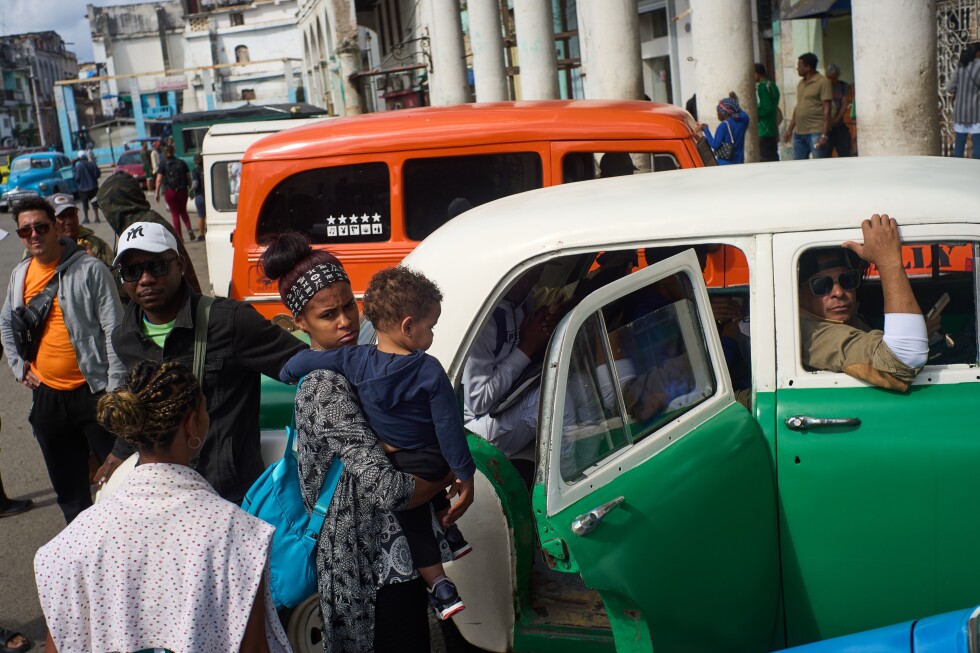
By Friday morning, the impact was already visible across the capital. Public transportation, already unreliable, had largely ceased operating, leaving many Cubans stranded for hours. Some resorted to walking long distances or hitchhiking to reach their destinations. The national transportation company announced cuts to routes in eastern Cuba, while the University of Havana said it would cancel some events and increase remote learning, citing “energy deficits.”
The crisis deepened following President Donald Trump’s executive order last week threatening to impose tariffs on countries providing oil to Cuba, a move that could further strangle an economy already on life support. Cuba produces only 40% of the oil it consumes, making it heavily dependent on imports.
The island’s communist government says U.S. sanctions cost the country more than $7.5 billion between March 2024 and February 2025, substantially more than the year before.
The situation worsened dramatically after Venezuela—once Cuba’s primary oil-rich ally—ceased shipments in January following a U.S. military operation that captured then-President Nicolás Maduro. Then, in late January, Mexico, long a vocal ally of Cuba, halted its oil exports to the island, further isolating Cuba from its energy suppliers.
While the U.S. announced $6 million in humanitarian aid to Cubans on Thursday night, this gesture does little to address the systematic pressure being applied to the island’s energy infrastructure. The sanctions have specifically targeted Cuba’s access to fuel, affecting every aspect of daily life.
“What does it mean to not allow a single drop of fuel to reach a country?” Díaz-Canel asked. “It affects the transportation of food, food production, public transportation, the functioning of hospitals, institutions of all kinds, schools, economic production, tourism. How do our vital systems function without fuel?”
Despite the crisis, much of Havana’s daily life continued in a testament to Cubans’ remarkable adaptability. Schools, banks, bakeries, and shops operated largely as usual, underscoring how normalized crisis has become in Cuba. Some transportation alternatives remained available—taxis, shared electric motorcycles, and employer-organized transport still functioned, though taxi fares remain far beyond the reach of most Cubans living on state salaries of less than $20 a month.
For many residents, the current economic turmoil wrought by U.S. policies echoes the severe economic depression of the 1990s known as the “Special Period” that followed cuts in Soviet aid. But for some, this crisis feels even more dire as it comes after years of accumulated hardship.
Cristina Díaz, a 51-year-old mother of two who works as a house cleaner, joined countless others walking along Havana’s roadsides on Friday. “We’re living as best we can,” she said. “What can I do? I live here, I was born here and this is my lot. I have to walk to get to work and to be able to feed my children.”
As gas stations see growing lines and power outages increase, Cubans are once again being forced to adapt to a new level of scarcity. The question on many minds isn’t just how to cope with today’s challenges, but how much more they can be expected to sacrifice as the vise of international isolation tightens around their island nation.
Fact Checker
Verify the accuracy of this article using The Disinformation Commission analysis and real-time sources.

29 Comments
Exploration results look promising, but permitting will be the key risk.
Good point. Watching costs and grades closely.
If AISC keeps dropping, this becomes investable for me.
Good point. Watching costs and grades closely.
Exploration results look promising, but permitting will be the key risk.
Good point. Watching costs and grades closely.
I like the balance sheet here—less leverage than peers.
The cost guidance is better than expected. If they deliver, the stock could rerate.
Good point. Watching costs and grades closely.
Good point. Watching costs and grades closely.
Uranium names keep pushing higher—supply still tight into 2026.
Good point. Watching costs and grades closely.
Good point. Watching costs and grades closely.
Interesting update on As US block of oil supply deepens energy crisis, Cubans ask: What more can we sacrifice?. Curious how the grades will trend next quarter.
The cost guidance is better than expected. If they deliver, the stock could rerate.
Good point. Watching costs and grades closely.
Good point. Watching costs and grades closely.
Silver leverage is strong here; beta cuts both ways though.
Good point. Watching costs and grades closely.
I like the balance sheet here—less leverage than peers.
Good point. Watching costs and grades closely.
The cost guidance is better than expected. If they deliver, the stock could rerate.
Good point. Watching costs and grades closely.
I like the balance sheet here—less leverage than peers.
Good point. Watching costs and grades closely.
Good point. Watching costs and grades closely.
Exploration results look promising, but permitting will be the key risk.
I like the balance sheet here—less leverage than peers.
Good point. Watching costs and grades closely.