


Listen to the article
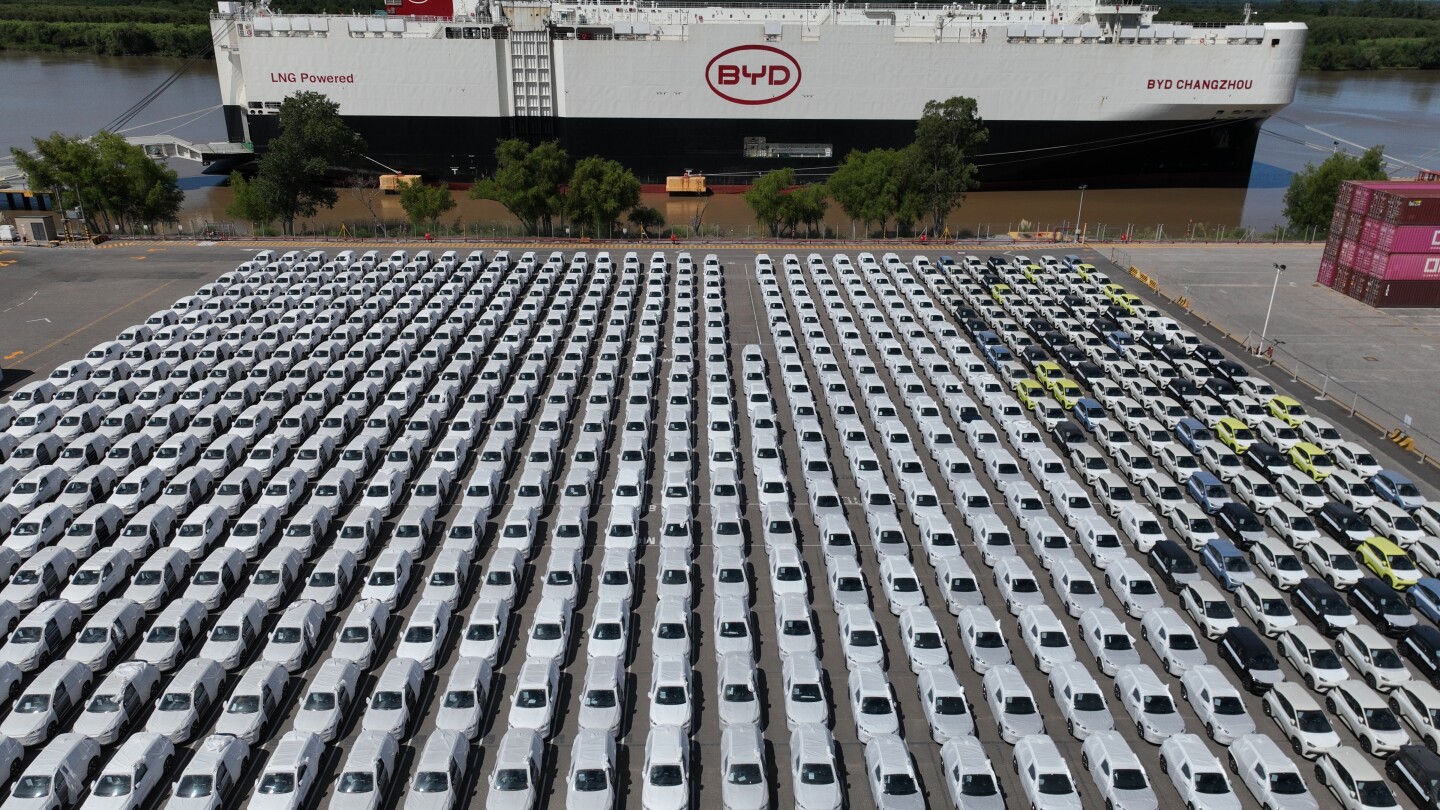
Over 5,800 Chinese electric vehicles gleamed on the cargo deck of the BYD Changzhou as it unloaded at an Argentine river port on Wednesday, marking a significant shift in the country’s traditionally closed economy.
The arrival of this massive shipment in Zárate, Buenos Aires province, represents an unprecedented moment for Argentina, where the economy has long been dominated by protectionist policies. For decades, stiff tariffs and import restrictions shielded local industries from foreign competition under left-wing populist governments.
“For decades people in Argentina had this vision that everything here must be manufactured here,” explained Claudio Damiano, a professor at Argentina’s National University of San Martin’s Institute of Transportation. “The boat has a symbolic value as the first step for BYD. Everyone’s wondering how far it will go.”
The timing of the shipment was particularly notable as it coincided with European Union lawmakers voting to delay ratification of a landmark free trade agreement with the Mercosur group of South American nations, including Argentina. The deal would have eliminated trade barriers for European industrial imports, potentially boosting German EV sales in the region.
“For the Europeans, there’s just no possibility of competing with the Chinese,” Damiano noted.
Argentina’s transformation into one of Latin America’s most closed economies was largely the result of Kirchnerism, the political movement led by former President Cristina Fernández de Kirchner and her late husband, Néstor Kirchner. Their policies championed worker rights and social welfare but also included sovereign debt defaults and a deep skepticism of global trade.
During this period, a chronically weakening peso and high taxes severely limited consumer options, forcing wealthier Argentines to smuggle iPhones and fashion items into the country after trips abroad.
This economic isolation shifted dramatically with the 2023 election of radical libertarian President Javier Milei, who campaigned against Kirchnerism’s economic model and vowed to slash government intervention in the economy. Despite ideologically aligning himself with former U.S. President Donald Trump, Milei has pursued policies that contrast sharply with Trump’s protectionist stance.
Since taking office, Milei has removed trade barriers, simplified customs procedures, and worked to stabilize the local currency to make imports more affordable. The results have been dramatic: Argentina recorded a 30% increase in imports last year compared to the previous year, with a flood of affordable Asian products from retailers like Temu and Shein reaching Argentine consumers.
Chinese automakers are among the biggest beneficiaries of Milei’s new economic approach. The government has established a quota allowing 50,000 electric and hybrid vehicles to enter Argentina tariff-free this year, previously subject to 35% import duties. The BYD shipment that arrived Monday at Zárate Port after a 23-day journey from Singapore represents the first wave of this new policy.
At the World Economic Forum in Davos on Wednesday, Milei touted his deregulation measures, stating they “allow us to have a more dynamically efficient economy,” and declaring: “This is MAGA, ‘Make Argentina Great Again.'”
While Milei and Trump share common ground on issues like climate change skepticism and budget cutting, their economic approaches diverge significantly. Trump has advocated for tariffs and protectionism, while Milei has embraced free market principles and international trade.
Despite these differences, the relationship has benefited Argentina, with the U.S. offering Milei a $20 billion credit swap last year to bolster his position ahead of crucial midterm elections.
China has emerged as the primary beneficiary of Argentina’s economic opening. Chinese imports to Argentina surged by over 57% last year, while Chinese investment flowed into the country’s energy and mining sectors.
“Argentina has rejoined the world,” government spokesperson Javier Lanari said of the Chinese car shipment. “Very soon, the Cuban-made vehicles left to us by Kirchnerism will be part of a sad and dark past.”
Chinese electric vehicle manufacturers are particularly well-positioned to capitalize on Argentina’s zero-tariff quota for EVs, which applies only to vehicles priced under $16,000.
“Chinese manufacturers have the technology and the ability to meet the price limits set by the government,” explained Andrés Civetta, an automotive sector economist at Argentine consulting firm Abeceb. “China has won the race.”
This influx of Chinese EVs has prompted concerns from Western automakers about unfair competition, while opposition lawmakers have criticized the government’s tariff exemption policy.
However, significant challenges remain before Argentina can fully embrace an electric vehicle future. Pablo Naya, founder of Sero Electric, Argentina’s only domestic electric car manufacturer, points out that the country’s aging power infrastructure isn’t prepared for widespread EV adoption, and there’s currently a lack of service centers capable of repairing Chinese electric vehicles.
“Honestly, we’re not worried,” Naya said from his factory in suburban Buenos Aires. But he acknowledged that if Argentine infrastructure and consumer demand eventually catch up with Chinese supply, “Then that would get complicated for us. We’d have a problem.”
Fact Checker
Verify the accuracy of this article using The Disinformation Commission analysis and real-time sources.

12 Comments
Interesting to see Argentina embrace Chinese EV imports, despite Trump’s rhetoric on tariffs. This could signal a shift in the country’s protectionist policies and open up new trade opportunities.
It will be fascinating to see how this impacts Argentina’s auto industry and if it leads to greater economic integration with China.
This is a significant shift for Argentina, which has traditionally maintained high tariffs and import restrictions to protect local industries. The Chinese EV deal could be a sign of greater economic openness to come.
It will be interesting to see how this affects the balance of power between Argentina and its Mercosur neighbors, as well as its relationship with the EU and the US.
The arrival of these Chinese EVs in Argentina is a significant development, potentially signaling a new era of economic openness for the country. It will be important to watch how this impacts the local auto industry and the country’s broader trade relationships.
This move could have wider implications for the regional balance of power, as Argentina seeks to diversify its economic partnerships beyond its traditional Western allies.
The arrival of this massive Chinese EV shipment is a symbolic moment for Argentina, which has long favored local production over foreign competition. It will be crucial to monitor how this affects the local auto market.
With the EU trade deal facing delays, Argentina may be looking to diversify its trading partners. This Chinese EV deal could be the start of a new chapter for the country’s economy.
The timing of this Chinese EV shipment, amid the EU trade deal delay, suggests Argentina may be looking to diversify its economic partnerships. This could have broader implications for the regional balance of power.
It will be crucial to monitor how this move impacts Argentina’s domestic auto industry and whether it leads to greater economic integration with China.
This massive Chinese EV shipment represents a symbolic shift in Argentina’s traditionally protectionist policies. It will be interesting to see if this leads to a broader opening of the country’s economy to foreign competition.
With the EU trade deal facing delays, Argentina may be seeking to strengthen its ties with China as a counterweight to Western influence in the region.