


Listen to the article
Israeli Drone Surveillance Expands as Crete Becomes New Migration Hotspot
An Israeli-built Heron 2 drone takes off from a tarmac in Tympaki, Greece, embarking on its latest surveillance mission. The sophisticated aircraft scans the treacherous 350-kilometer stretch of Mediterranean Sea between Libya and Crete, capable of detecting activity both on and below the decks of vessels attempting the crossing.
Crete, Greece’s largest island, has emerged as the country’s busiest point of irregular migration entry, recording a threefold increase in arrivals last year. Approximately 20,000 migrants reached its shores in 2025, even as overall irregular migration to Europe declined by 26% compared to the previous year, according to data from Frontex, the European Union’s border agency.
This route across the Libyan Sea has become one of Europe’s deadliest migration corridors, where unclaimed bodies regularly wash ashore. The passage is increasingly utilized by people fleeing wars and instability throughout Africa, growing busier despite diminishing pressure on other Mediterranean routes.
As the European Union prepares to implement tougher measures against illegal migration, Frontex has announced it will concentrate resources on Crete to address the surge in arrivals.
Eastern Libya has emerged as a critical departure point for smugglers, undermining years of EU efforts to reduce Mediterranean crossings and transforming Crete into a new pressure point in Europe’s migration challenge. Many vessels departing Libya are dangerously overcrowded and barely seaworthy, attempting a long, exposed journey across open waters. This dangerous gamble has led to numerous tragedies, including a 2023 fishing trawler disaster that claimed at least 700 lives.
In a recent incident, Greek authorities rescued 20 migrants and recovered four bodies from a vessel in distress south of Crete. Dozens more passengers are feared missing, presumed dead.
“Each rescue underscores the same brutal reality: The crossing is a gamble with lives,” said a local coast guard official who requested anonymity due to not being authorized to speak publicly.
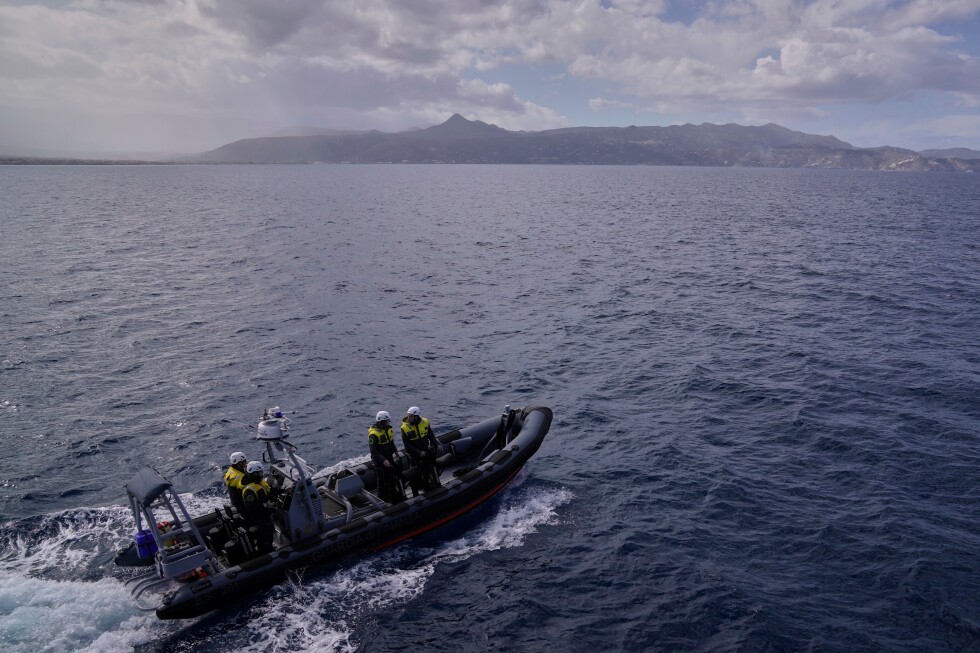
The migration route to Crete differs significantly from the shorter journey from Turkey to nearby Greek islands. It requires larger vessels capable of navigating open seas for days, necessitating a different operational response from Frontex, including deployment of bigger patrol boats and expanded aerial surveillance capabilities.
Mariusz Kawczynski, a senior Frontex operations official, emphasized the critical importance of drone technology while standing beside the surveillance aircraft at Tympaki airfield. “There is no substitute in modern technology to have eyes for Europe of the threats that are coming to our borders,” he stated.
Georgios Pyliaros, who heads Frontex operations in Greece and Cyprus, noted that while bad weather caused an expected seasonal decrease in crossings during January and February, the agency anticipates increased activity in spring. “If we take into consideration what happened in the last two or three years, we will have some increase in the following months, for sure,” Pyliaros said.
The surge in arrivals to Crete last year prompted Greece to harden its political stance on migration. The country temporarily suspended asylum claims for migrants arriving via Libya for three months, eliminated certain amnesty provisions, and introduced mandatory imprisonment for asylum seekers whose applications are rejected.
The European Union is similarly adopting a stricter approach, with new bloc-wide migration rules taking effect in June. These regulations aim to implement more rigorous border screening and expedite deportation processes for those deemed ineligible to remain.
Frontex’s standing corps is projected to reach 10,000 officers by year-end—double the number employed in 2021—reflecting both the policy shift and expectations of continued pressure along key migration routes.
This increased migration is occurring against a backdrop of global instability. A conflict-tracking project at Sweden’s Uppsala University recorded 61 active conflicts globally in 2024—the highest number since World War II—including expanding militant activity across western Africa, a significant driver of displacement.
The human cost remains staggering. The International Organization for Migration (IOM), a United Nations agency, estimates that at least 2,185 people died or went missing in the Mediterranean in 2025. As of February 24, the agency had already recorded 606 migrant deaths in the Mediterranean this year, with warnings that limited access to search-and-rescue information means the actual death toll is likely much higher.
“The continued loss of life on migration routes is a global failure we cannot accept as normal,” IOM Director General Amy Pope said. “These deaths are not inevitable.”
Fact Checker
Verify the accuracy of this article using The Disinformation Commission analysis and real-time sources.

22 Comments
The cost guidance is better than expected. If they deliver, the stock could rerate.
Interesting update on As Europe readies tougher migration measures, a Greek island sees illegal crossings spike. Curious how the grades will trend next quarter.
Good point. Watching costs and grades closely.
Exploration results look promising, but permitting will be the key risk.
Good point. Watching costs and grades closely.
Good point. Watching costs and grades closely.
Uranium names keep pushing higher—supply still tight into 2026.
Good point. Watching costs and grades closely.
Silver leverage is strong here; beta cuts both ways though.
Good point. Watching costs and grades closely.
Good point. Watching costs and grades closely.
I like the balance sheet here—less leverage than peers.
Good point. Watching costs and grades closely.
Interesting update on As Europe readies tougher migration measures, a Greek island sees illegal crossings spike. Curious how the grades will trend next quarter.
Good point. Watching costs and grades closely.
Uranium names keep pushing higher—supply still tight into 2026.
Production mix shifting toward Business might help margins if metals stay firm.
Good point. Watching costs and grades closely.
Nice to see insider buying—usually a good signal in this space.
Good point. Watching costs and grades closely.
Good point. Watching costs and grades closely.
The cost guidance is better than expected. If they deliver, the stock could rerate.