


Listen to the article
China’s Abandoned “Life in Venice” Finds New Purpose as Young Professionals Seek Affordable Living
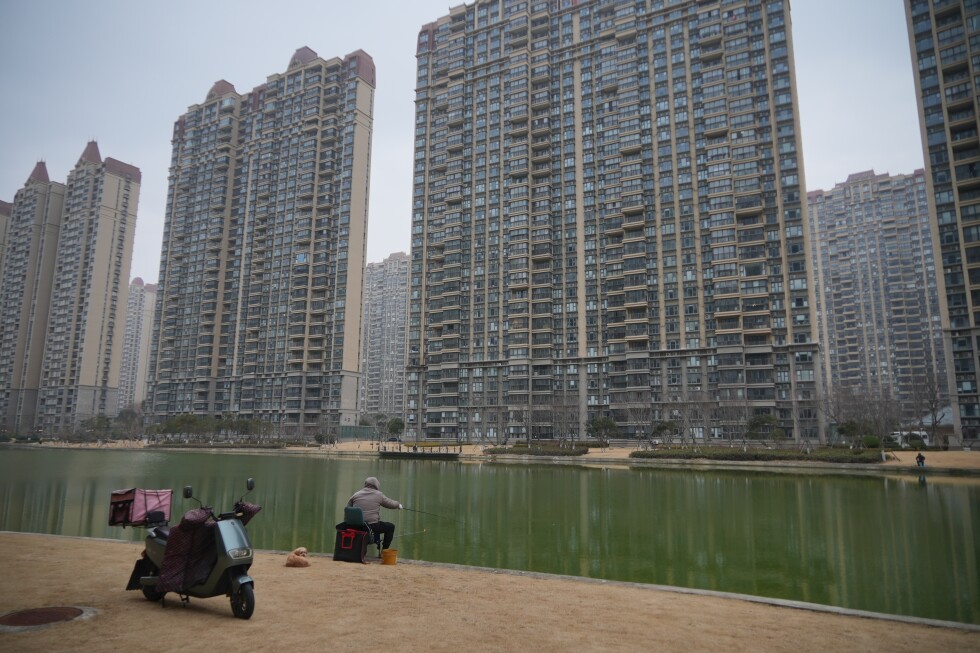
In a surreal twist of economic fate, “Life in Venice” — a multibillion-dollar replica of the iconic Italian city on China’s eastern coast — has found an unexpected second life. Once envisioned as a luxurious weekend retreat for Shanghai’s elite, the largely abandoned development has become a haven for burned-out young professionals seeking refuge from China’s intense work culture.
Sasa Chen, a 28-year-old former finance professional who left her high-paying Shanghai job, represents this growing trend. She now pays just 1,200 RMB ($168) monthly for her apartment in this ghost town in Jiangsu province, allowing her to retire decades ahead of schedule.
“I have all the time in the world, the freedom of doing whatever I want,” said Chen, who previously earned up to 700,000 yuan ($98,480) annually. “I am living the life that I want.”
Chen’s story illustrates a significant shift in Chinese youth culture. While previous generations flocked to booming megacities for career advancement and prosperity, today’s young adults increasingly seek affordable alternatives in smaller cities and towns as economic growth slows and competition intensifies.
The “Life in Venice” development stands as a monument to China’s property market collapse. Originally designed with 46,000 housing units, less than 20% are currently occupied. Home prices have plummeted by more than half since the property market downturn, creating opportunities for bargain hunters willing to live in remote locations. The development’s original builder, real estate giant Evergrande, filed for bankruptcy earlier this year, further depressing property values.
This migration pattern connects to broader social movements in China. Many young professionals are rejecting the notorious “996” work culture — working 9 a.m. to 9 p.m., six days a week — and embracing alternatives like “lying flat,” a philosophy that rejects career ambition and materialism in favor of minimalism and personal freedom.
The concept parallels the Western FIRE movement (Financial Independence, Retire Early) but proves more attainable in China’s distressed property markets where living costs can be remarkably low. In “Life in Venice,” a meal of noodles or rice costs under three dollars, making sustainable living on minimal income possible.
For Chen, meticulous financial planning made this lifestyle shift possible. After saving 2 million yuan ($290,000), she calculated she could live indefinitely on investment returns while paying her modest rent. She’s traded Shanghai’s convenience for sea views, clean air, and liberation from corporate life.
“I never believed that work is the meaning of life,” Chen explained. “My ideal state of life is not to work and stay at places that I like.”
This phenomenon extends beyond “Life in Venice.” Ban Zhao, 29, relocated from a bustling eastern city to a small town in southwestern Yunnan province known for its fresh air and hot springs. There, she pays just 800 yuan ($110) monthly for a three-bedroom apartment, working less than 20 hours weekly teaching online yoga classes.
“I can do whatever I want and not do whatever I don’t want,” Ban said. “I live in heaven.”
Even more extreme examples exist in places like Hegang, a declining coal mining city in northeastern China where apartments sell for astoundingly low prices. Real estate agent Yang Xuewei has sold over 100 properties to clients nationwide, with one-bedroom apartments available for just $3,000 and four-bedroom units for $13,000.
While comprehensive data on this workforce exodus remains limited, Beijing alone lost 1.6 million residents in their twenties and early thirties between 2019 and 2024 — comparable to Philadelphia’s entire population — according to official statistics.
This migration coincides with China’s economic slowdown to 5% growth and rising youth unemployment, which stood at 16.5% in December for those aged 16-24 who aren’t in school.
“People are quitting this competition, this very clear, linear, upward career track,” explained Xiang Biao, director of the Max Planck Institute for Social Anthropology. “It’s a broader trend.”
Chen Zhiwu, a finance professor at the University of Hong Kong, views this shift pragmatically: “Young people are facing reality and thinking hard about their futures. It’s natural.”
As China’s economic landscape transforms, these abandoned developments and declining industrial towns may increasingly become havens for a generation redefining success away from the traditional paths of their parents.
Fact Checker
Verify the accuracy of this article using The Disinformation Commission analysis and real-time sources.

10 Comments
The story of these young Chinese professionals ‘retiring’ to affordable housing in the abandoned ‘Life in Venice’ developments is a striking illustration of how economic and social trends can lead to unexpected outcomes. It highlights the resilience and adaptability of people in the face of changing circumstances, as well as the challenges posed by the intense work culture and high costs in China’s major cities.
Well said. This trend certainly reveals the dynamic and innovative ways in which people can find solutions to economic challenges. It will be interesting to see if this type of ‘early retirement’ in repurposed developments becomes more prevalent, or remains a relatively niche phenomenon.
Fascinating to see how economic trends can lead to unexpected living arrangements. This ‘retirement’ trend among young Chinese professionals speaks to the challenges of the intense work culture and rising living costs in major cities. It will be interesting to see if this becomes a more widespread phenomenon.
You’re right, this does seem like an unusual but creative solution for young people seeking a better work-life balance and more affordable living. It will be worth watching how this evolves in China’s changing economic landscape.
This is a fascinating example of how economic and social trends can lead to unexpected outcomes. The fact that these abandoned ‘Life in Venice’ developments are now being repurposed by young Chinese professionals as affordable housing is quite remarkable. It highlights the ingenuity and adaptability of people in the face of changing circumstances.
Absolutely. This trend speaks to the innovative ways in which people can find solutions to challenging economic conditions. It will be interesting to see if this type of ‘early retirement’ in repurposed developments becomes more widespread, or remains a niche phenomenon.
This is a striking example of the unintended consequences of China’s rapid urbanization and economic growth. The fact that these abandoned ‘Life in Venice’ developments are now providing affordable housing options for young professionals is quite remarkable. It reveals the dynamic nature of how people adapt to changing circumstances.
Definitely an intriguing shift, as you say. It will be fascinating to see if this becomes a more mainstream trend, or remains a niche solution for a relatively small segment of the population.
The idea of young, high-earning Chinese professionals ‘retiring’ to these ghost town developments is quite striking. It speaks to the immense pressures and costs of living in China’s largest cities. While the living conditions may not be ideal, the ability to achieve financial independence and a better work-life balance at a young age is certainly appealing.
You make a good point. For those seeking an alternative to the grueling pace and high costs of major Chinese cities, these developments could provide a viable, if unconventional, option to ‘retire’ early and enjoy a more relaxed lifestyle.