


Listen to the article
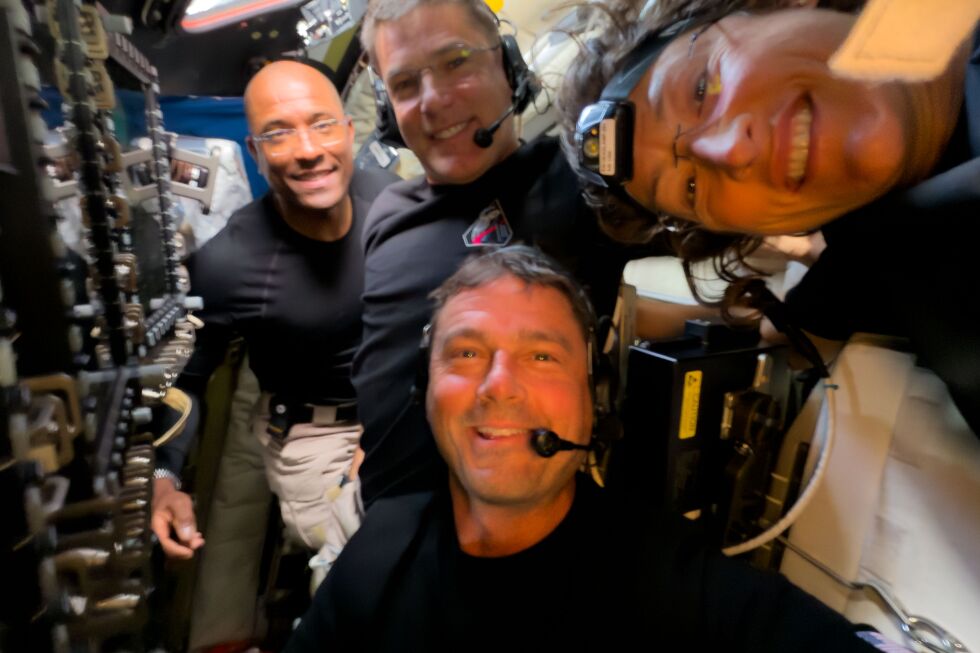
In a historic first, Artemis II astronauts connected with International Space Station crew members on Tuesday during their journey back from their lunar flyby. The unprecedented moonship-to-spaceship radio communication marked a significant milestone in space exploration history.
“We have been waiting for this like you can’t imagine,” said Artemis II commander Reid Wiseman during the cosmic conversation. The call represented a stark contrast to NASA’s Apollo missions of the 1960s and 1970s, when lunar explorers had no other humans in space to communicate with.
The exchange held special significance for astronauts Christina Koch on Artemis II and Jessica Meir aboard the ISS, who previously made history together in 2019 by conducting the world’s first all-female spacewalk outside the orbiting laboratory. Despite being separated by approximately 230,000 miles (370,000 kilometers), the reunion proved emotional for both pioneers.
“I’m so happy that we are back in space together,” Meir told Koch, “even if we are a few miles apart.” Koch responded that she’d hoped to reunite with her “astro-sister” in space, but “never thought it would be like this — it’s amazing.”
Houston’s Mission Control facilitated the conversation between the four lunar travelers and the space station’s four residents, which include three NASA astronauts and one French crew member.
The Artemis II mission has already secured its place in space exploration history by setting a new distance record for human space travel. Commander Wiseman continued sharing images from Monday’s lunar rendezvous, including an Earthset photo reminiscent of Apollo 8’s iconic Earthrise image captured in 1968.
During the call, Koch described being profoundly moved by Earth’s appearance from such a distance. “It just made it even more special. It truly emphasized how alike we are, how the same thing keeps every single person on planet Earth alive,” she explained to the ISS crew. “The specialness and preciousness of that really is emphasized when viewing the home planet from the moon.”
In a subsequent scientific debriefing with Mission Control’s lead lunar scientist Kelsey Young, the astronauts shared fascinating observations from their lunar flyby. They reported witnessing a cascade of pinprick-like flashes of light on the lunar surface caused by impacting cosmic debris. These millisecond-long illuminations coincidentally aligned with Monday evening’s total solar eclipse visible from parts of Earth.
The Artemis II crew represents humanity’s first lunar explorers since Apollo 17’s mission in December 1972, marking the end of a 52-year gap in human deep space travel. Their Orion capsule is scheduled for splashdown off the San Diego coast on Friday, concluding their nearly 10-day test flight.
This mission is a critical stepping stone in NASA’s ambitious Artemis program. Artemis III, planned for next year, will feature a lunar lander docking demonstration in Earth orbit. By 2028, Artemis IV aims to land two astronauts near the lunar south pole, expanding human presence beyond previous Apollo landing sites.
Not all aspects of the journey have proceeded flawlessly. The crew has experienced recurring issues with their spacecraft’s toilet system since launch, forcing them to rely on backup waste collection methods. NASA Administrator Jared Isaacman acknowledged the plumbing problem after Monday’s lunar flyby, stating: “We definitely have to fix some of the plumbing” before the next Artemis mission.
Despite these technical challenges, the mission has achieved its primary objectives of testing critical systems and procedures necessary for future lunar landings. The successful completion of Artemis II represents a significant milestone in NASA’s broader vision of establishing sustainable human presence on and around the Moon as a precursor to eventual Mars exploration.
Fact Checker
Verify the accuracy of this article using The Disinformation Commission analysis and real-time sources.

10 Comments
The personal connection between the Artemis II and ISS astronauts, like the ‘astro-sisters’ reunion, really humanizes this historic space achievement. I’m looking forward to hearing more about the emotional and inspirational aspects of this long-distance call, in addition to the technical details.
Incredible to see the Artemis II astronauts connect with the ISS crew during their lunar flyby. Bridging the vast distance between the Moon and Earth’s orbit is a remarkable feat of space exploration. I wonder what insights they’ll share about this historic communication.
What a remarkable achievement for the Artemis II crew to be able to communicate directly with the ISS astronauts during their lunar mission. This level of connectivity between crewed spacecraft is a sign of the progress in space exploration and the growing collaborative spirit among international space agencies.
Kudos to the teams behind the Artemis II and ISS missions for enabling this remarkable long-distance communication. The ability to bridge the vast expanse between the Moon and Earth’s orbit is a testament to the advancements in space technology and the collaborative spirit of the global space community.
This long-distance call between the Artemis II and ISS crews is an inspiring milestone. It’s amazing to see the progress in space communication technology that enables such real-time interactions, even across the vast distances involved. I look forward to learning more about the insights they exchange.
The ability for the Artemis II astronauts to connect with the ISS crew during their lunar flyby is a testament to the advancements in space communication systems. I’m curious to hear more about the technical details and challenges involved in maintaining this long-distance link.
Yes, the technical challenges of establishing and maintaining reliable communication over such vast distances must have been significant. It will be interesting to learn about the engineering innovations that made this possible.
Exciting times for space travel! The personal connection between the Artemis II and ISS astronauts adds a wonderful human element to this technical achievement. I’m curious to hear more about their reflections on the significance of this long-distance call.
Agreed, the personal reunion between the ‘astro-sisters’ must have been incredibly meaningful. Moments like these showcase the collaborative spirit of the international space community.
This long-distance call between the Artemis II and ISS crews is a significant milestone in space exploration history. I’m curious to learn more about the logistical and technical challenges involved in maintaining reliable communication over such vast distances, and how this capability will enable future deep-space missions.