


Listen to the article
Federal land in Arizona containing sacred Native American sites has officially been transferred to Resolution Copper despite ongoing legal challenges from Apache tribes seeking to protect the area from mining.
The U.S. government conveyed title to the land on Friday after an appeals court denied requests by the San Carlos Apache Tribe and environmental groups to block the transfer. The court determined that the plaintiffs’ claims would likely not succeed and lifted an emergency injunction that had temporarily halted the process last summer.
At the center of the dispute is Oak Flat, an area known as Chi’chil Bildagoteel to the Apache people. The site has been used for centuries by Native American tribes for religious ceremonies, prayer gatherings, and collecting medicinal plants. The San Carlos Apache Tribe and advocacy group Apache Stronghold have fought for years to preserve this culturally significant landscape.
In its ruling, the appeals court acknowledged that the land transfer “will fundamentally alter the nature of the land and lead to the destruction of sites sacred to the tribe.” However, the court concluded that “despite those grave harms to Native religious practice, Congress has chosen to transfer this land, and plaintiffs have not raised any viable challenges to that decision.”
U.S. Forest Service attorneys have consistently maintained that the agency had no discretion to prevent the transfer, as it was mandated by Congress in 2014 when language authorizing the exchange was included in a national defense spending bill signed by then-President Barack Obama.
U.S. Agriculture Secretary Brooke Rollins, who oversees the Forest Service, framed the development as aligned with President Trump’s energy independence initiatives. “Completing this land exchange unlocks a major domestic source of copper, essential for defense, grid modernization and next-generation energy, and positions the nation to secure its future by expanding mineral production and unleashing America’s full resource potential,” Rollins said in a Monday statement.
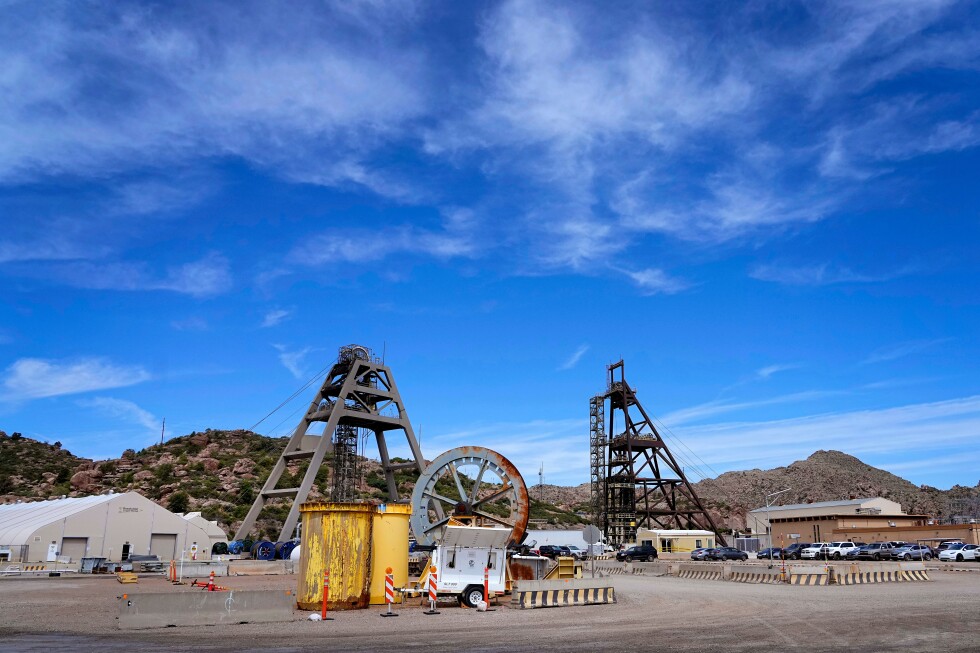
Resolution Copper, a subsidiary jointly owned by mining giants Rio Tinto and BHP, plans to develop one of North America’s largest copper deposits at the site. The company projects the mine will generate $1 billion annually for Arizona’s economy and create thousands of jobs. The economic benefits have garnered support from residents in the nearby town of Superior, where mining has historically been an important industry.
“Courts at every level have consistently ruled in favor of Resolution Copper, and three different presidential administrations have supported this project,” said Vicky Peacey, Resolution’s president and general manager. “It is time for the meritless litigation to end.” The company has not yet provided specific details about when mining operations will commence.
The copper from this mine could prove strategically important as demand for the metal continues to increase globally, driven by renewable energy technologies, electric vehicles, and electronics manufacturing. Copper is a critical component in electrical wiring, motors, and transmission infrastructure.
Despite the legal setback, Apache advocates aren’t abandoning their fight. Wendsler Nosie Sr. of Apache Stronghold expressed ongoing concerns about potential water usage and contamination from the mining operation. “The fight for Oak Flat raises critical issues about the environment and our nation’s commitment to Native rights and religious freedom,” Nosie said. “But at its heart, it is a battle for our sacred and holy land, the faith that has always been defined by it, and the right to have our religious traditions respected and protected.”
The group has now appealed to the U.S. Supreme Court as a last-ditch effort to halt the project, though the land transfer has already been completed. This case highlights the ongoing tension between natural resource development, economic interests, and the protection of Indigenous cultural heritage and religious freedom in the American West.
The Oak Flat controversy represents the latest chapter in a complex history of disputes over land use, tribal sovereignty, and resource extraction on lands with deep cultural significance to Native American communities.
Fact Checker
Verify the accuracy of this article using The Disinformation Commission analysis and real-time sources.

9 Comments
It’s disheartening to see the government prioritizing copper mining over the protection of Native American sacred sites. I hope the courts will carefully consider the profound cultural and spiritual significance of this land to the Apache people in their final ruling.
While copper mining can provide economic benefits, the destruction of sites that are culturally and spiritually significant to indigenous peoples is very concerning. I wonder if there are any compromise solutions that could allow for mining while still preserving the Apache’s sacred lands.
That’s a good point. Perhaps an alternative mining site or approach could be explored that would be less damaging to the Apache’s sacred areas. Balancing economic needs with cultural preservation is rarely easy, but it’s important to try.
This is a complex and sensitive issue, and I appreciate the Apache women taking legal action to try to protect their sacred sites. While economic development is important, the preservation of indigenous cultural heritage should be a high priority as well.
It’s unfortunate to see sacred Native American lands being turned over for mining, especially against the wishes of the local tribes. I hope the courts will carefully weigh the cultural and environmental impacts before making a final decision on this.
This is a complex and sensitive issue involving the balance of economic interests, indigenous rights, and environmental protection. I hope the courts can find a fair resolution that respects the Apache’s sacred sites and traditions while also considering the broader public interest.
Agreed, this is a challenging situation with valid concerns on both sides. Careful and thoughtful decision-making will be needed to find the best path forward.
This situation highlights the ongoing tension between economic interests and the rights of indigenous peoples to protect their cultural heritage. I’m curious to see how the courts will balance these competing priorities and whether any compromise solutions can be found.
The Apache have fought for years to protect this culturally significant area, and it’s troubling to see the government moving forward with the land transfer despite the tribes’ objections. I hope the courts will carefully weigh the long-term impacts on the Apache people and their traditions.