


Listen to the article
Ancient Roman House Opens to Public Through Virtual Tours
One of the best-preserved ancient Roman homes on the Palatine Hill is opening to the public for the first time, offering history enthusiasts a rare glimpse into aristocratic life during the Roman Republic. The House of the Griffins, named for its distinctive mythological frescoes, will welcome visitors through an innovative livestreamed tour system starting March 3.
The historic domus, first discovered during early 20th century excavations, remained hidden underground for centuries after Emperor Domitian built his palace directly on top of it in the first century A.D. This architectural layering inadvertently preserved the home in remarkable condition, making it a valuable window into Republican-era Rome, which historians typically date from 509 B.C. to 27 B.C.
“It was certainly a domus of the highest standard,” explains project chief Federica Rinaldi. “Its location at the highest point of the hill, its distribution over several levels that take advantage of the slopes of the Palatine Hill itself, and its preservation make it today an almost textbook reference.”
The Palatine Hill, which rises prominently above the Roman Forum and offers commanding views of central Rome with its distinctive red brick ruins, was once the most prestigious residential district in the ancient city. Located just steps from the Colosseum, the hill initially housed temples and homes of leading citizens during the Republic before transforming into the aristocratic quarter during the Empire.
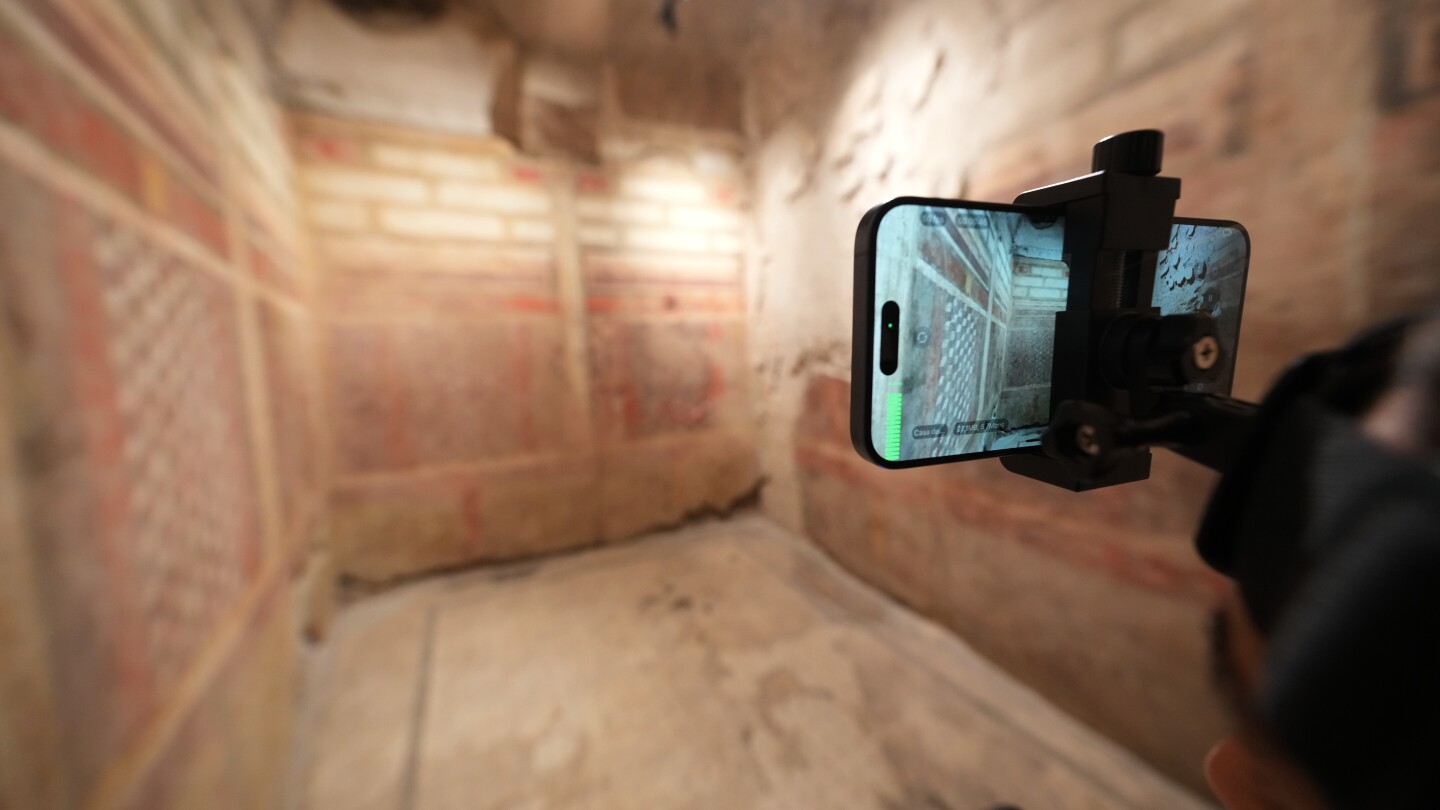
The home’s elaborate decoration reveals the wealth and sophistication of its original inhabitants. Though archaeologists know little about the specific family who lived there, the lavish interiors rival those found in Pompeii’s elegant villas. Visitors will marvel at richly colored faux marble frescoes and intricate floor mosaics featuring three-dimensional cube patterns.
Most striking is the artwork that gives the house its name: an arched lunette fresco depicting two griffins—mythical creatures with the body of a lion and the head and wings of an eagle.
Due to the fragile nature of the site and its difficult underground location, traditional tours would be impractical. The Colosseum Archaeological Park has developed an innovative solution: a tour guide equipped with a head-mounted smartphone will descend the steep staircase into the domus, livestreaming the experience to visitors gathered aboveground.
This approach serves dual purposes—allowing public access to an otherwise inaccessible site while protecting the delicate frescoes from excessive humidity and carbon dioxide that would result from large groups touring the space in person.
Tours will be offered weekly on Tuesdays, with sessions in both Italian and English. Each group is limited to 12 people and requires advance reservations along with a special ticket in addition to the standard Colosseum-Palatine Hill entrance fee.
The restoration of the House of the Griffins represents one of 10 European Union-funded projects within the archaeological park. It forms part of a broader strategy to distribute tourist traffic beyond the frequently overcrowded Colosseum and Forum areas.
“It’s a great occasion to value the full territory of the park,” noted Simone Quilici, head of the Colosseum Archaeological Park, highlighting the initiative’s role in showcasing the site’s less-visited treasures.
By blending cutting-edge technology with meticulous restoration work, Roman authorities are offering a sustainable solution to the competing demands of conservation and public access, ensuring this remarkable piece of architectural history can be appreciated by modern visitors without compromising its preservation for future generations.
Fact Checker
Verify the accuracy of this article using The Disinformation Commission analysis and real-time sources.

7 Comments
Livestreaming tours of historical sites is such an innovative approach. It democratizes access to cultural heritage and could really boost tourism and interest in places like the Palatine Hill.
This is a fascinating blend of ancient history and modern technology. Virtual tours of historic sites like the House of the Griffins offer a unique opportunity for people around the world to experience the grandeur of ancient Rome.
The preservation and restoration work done on the House of the Griffins is really impressive. It’s exciting to think about how technology can help bring these lost worlds back to life.
I’m really interested in the architectural details and frescoes that have been preserved in this domus. It’s amazing that such an important piece of history was hidden underground for so long before being rediscovered and restored.
Absolutely, the virtual tour format allows us to appreciate these incredible artifacts without the risk of damage from large crowds. A great way to make archaeology and history more accessible.
I wonder what other ancient Roman sites could benefit from similar virtual tour programs. There must be so much more to uncover and share with the public in an immersive, digital format.
Great point. Virtual tours could open up a whole new world of ancient archaeology and architecture to people who may not have the means to travel to these destinations in person.