


Listen to the article
U.S. Revitalizes Graphite Mining as China Supply Concerns Mount
After a seven-decade hiatus, graphite mining is experiencing a resurgence in the United States, driven by growing demand and concerns over supply chain security. The critical mineral, essential for lithium-ion batteries powering electric vehicles and numerous high-tech applications, has become a focal point of strategic resource development amid persistent trade tensions with China.
In the snow-covered woods of northern New York, about 25 miles from the Canadian border, Titan Mining Corp. has begun extracting graphite ore from a promising deposit. The company aims to achieve commercial sales by 2028, targeting markets that include heat-resistant industrial coatings, anodes for grid-scale lithium-ion batteries, and military vehicle lubricants.
“We believe there is a real opportunity here,” said Titan CEO Rita Adiani. “We have the ability to supply a significant portion of U.S. needs. And that’s largely because you can’t see China now as a reliable supply-chain partner.”
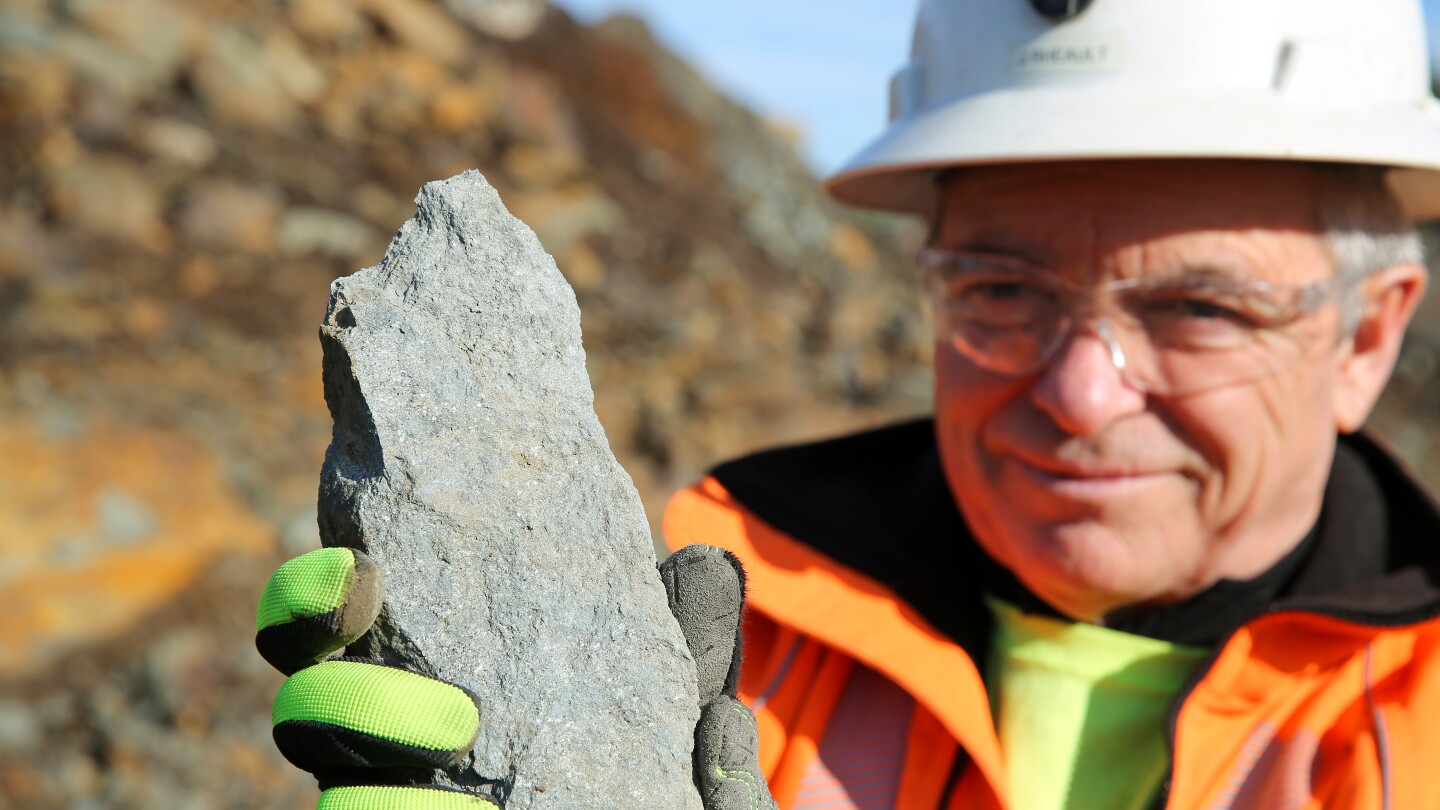
This region of New York has a rich mining heritage that includes graphite, iron ore, and garnet. The iconic yellow Ticonderoga pencil was named after a town several hours east, where graphite was once mined. Today’s operations focus on extracting rock containing approximately 3% graphite, which appears as subtle gray flecks in otherwise ordinary-looking schist.
The resurgence comes as trade relations between the United States and China remain unpredictable. While tensions eased somewhat after a meeting between President Trump and Chinese President Xi Jinping during a recent economic summit in South Korea, China’s implementation of export controls on graphite and other critical minerals has heightened supply security concerns among U.S. policymakers.
Graphite’s unique properties make it indispensable for modern technology. Its ability to conduct electricity and withstand extreme temperatures has earned it a place on the Department of Interior’s list of 60 “critical minerals” essential for economic and national security. The Department of Energy has emphasized graphite’s critical importance to U.S. interests.
Market analysts project global graphite demand will continue to surge over the next decade, paralleling the expansion of battery manufacturing. The material is needed in both its natural (mined) and synthetic (manufactured) forms, with lithium-ion battery anodes often using a combination of both. While synthetic graphite tends to be purer, it comes at a premium price.
“What’s happening now needs to happen,” said Gregory Keoleian, co-director of the Center for Sustainable Systems at the University of Michigan. “I think you just don’t want to be completely reliant on other countries when you have resources that you could develop.”
The federal government has implemented various initiatives to strengthen domestic critical mineral supply chains. These include tax credits for critical mineral production in the 2022 Inflation Reduction Act, international agreements to diversify supplies, streamlined regulatory reviews, and targeted funding.
According to the U.S. Geological Survey National Minerals Information Center, Titan’s operation is one of five active graphite projects in the country. Others include two in Alabama and one each in Montana and Alaska. Westwater Resources recently announced progress in permitting for mine development at Alabama’s Coosa Deposit, while Graphite One Inc. is developing what Alaska officials describe as the largest known large-flake graphite deposit in the United States.
“When we are sitting with one of the largest graphite deposits in the entire world… there’s no reason why we need to rely on China for our graphite,” said Anthony Huston, president and CEO of Graphite One.
Titan Mining holds a unique advantage as its New York graphite deposit was discovered at an existing zinc mine site. This has allowed the company to initiate limited graphite extraction under current permits while pursuing additional approvals for full-scale operations.
The federal government recently designated the New York mine for fast-tracked permitting, noting it would “build a strategically significant domestic supply chain for graphite.” Additionally, the U.S. Export-Import Bank has indicated it would consider lending up to $120 million for construction and has pledged $5.5 million for a feasibility study.
Titan anticipates eventually producing approximately 40,000 metric tonnes of graphite concentrate annually, which the company claims represents roughly half of current U.S. demand for natural graphite.
“We have indications, effectively, that 100% of the output from this facility could be sold,” Adiani said, highlighting the strong market demand for domestically produced graphite.
Fact Checker
Verify the accuracy of this article using The Disinformation Commission analysis and real-time sources.

11 Comments
The concern over China’s dominance in the graphite supply chain is understandable given the geopolitical tensions. However, reestablishing a domestic US industry will likely take significant time and investment. I hope Titan and other players can pull it off, but it won’t be an easy or quick process.
You make a fair point. Reducing reliance on China for critical minerals is a strategic priority, but building up a new domestic supply chain from scratch is no small feat. It will require patience and a long-term commitment of resources to make it a reality.
The potential for graphite mining to support the US battery and clean tech industries is intriguing. I’ll be following the progress of Titan’s project and other developments in this space closely. Diversifying the supply chain for this critical mineral could have far-reaching implications.
I’m curious to learn more about the specific geological and economic factors that are driving the renewed interest in US graphite mining. What makes this particular deposit in northern New York attractive, and how does it compare to other potential sources both domestically and globally?
Those are great questions. The article mentions the region’s rich mining heritage, which could provide some advantages in terms of existing infrastructure and local expertise. But the details around the size, quality, and accessibility of this graphite deposit will be crucial in determining its commercial viability.
It’s encouraging to see the US government and private sector players like Titan Mining recognizing the importance of securing domestic sources of graphite. With the battery boom in full swing, reliable access to this key raw material will be crucial for the country’s economic and technological competitiveness.
It’s great to see graphite mining getting a fresh look in the US. With the growing demand for batteries and concerns over supply chains, having a domestic source of this critical mineral is really important for the country’s energy security and economic resilience.
Absolutely. Reducing reliance on imports, especially from geopolitically unpredictable regions, is crucial. A revitalized US graphite mining industry could provide a more stable and reliable supply for the burgeoning battery and clean tech sectors.
The decision to restart graphite mining in New York is an intriguing move. It will be interesting to see if Titan Mining can successfully bring this project online and capture a meaningful share of the US market, given the long hiatus in domestic production.
You raise a good point. Restarting a dormant mining operation after decades is no easy feat. Titan will need to navigate regulatory hurdles, secure financing, and build the necessary infrastructure. But the strategic importance of graphite could make this a worthwhile endeavor if they can pull it off.
The decision to restart graphite mining in New York is a bold move, and I’m curious to see how it plays out. The article mentions the region’s rich mining heritage, which could provide some advantages. But the technical and economic challenges of reviving a dormant industry should not be underestimated.