


Listen to the article
Air Canada CEO to Retire Following Criticism Over English-Only Condolence Message
Air Canada announced Monday that CEO Michael Rousseau will retire later this year, following widespread criticism over his English-only message of condolence after a deadly crash in New York earlier this month.
The 68-year-old executive has informed the board of his intention to step down by the end of the third quarter, according to Canada’s largest airline, which is headquartered in French-speaking Quebec.
Prime Minister Mark Carney called Rousseau’s decision to retire “appropriate” and emphasized that bilingualism is essential for the airline’s leadership. “It is essential that the next CEO of Air Canada is bilingual,” Carney stated.
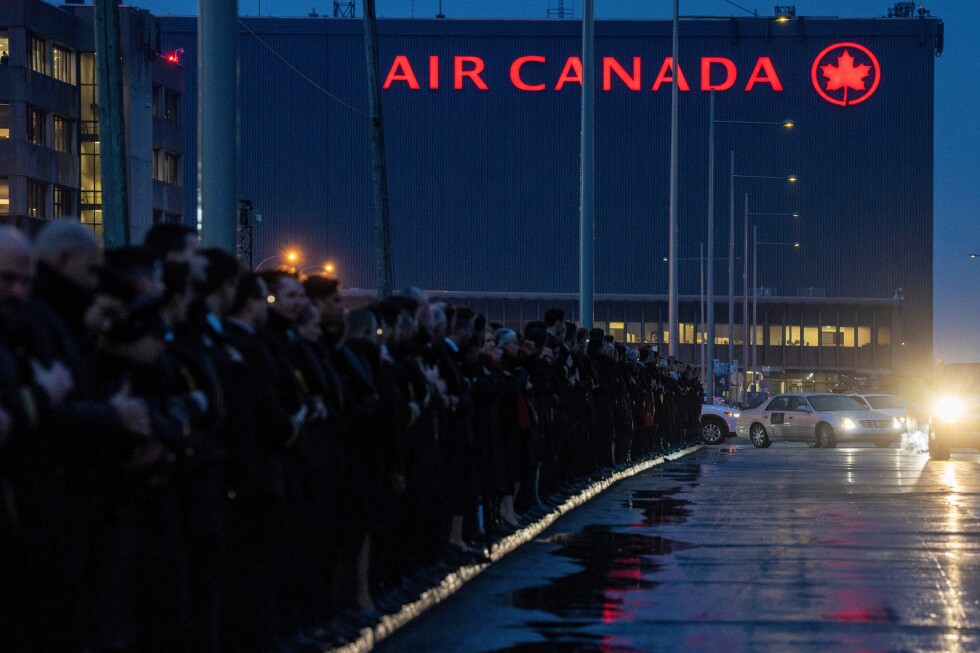
The controversy stems from Rousseau’s response to a tragic accident at LaGuardia Airport, where Air Canada Jazz flight from Montreal collided with a fire truck shortly after landing. The crash claimed the lives of two pilots, including Antoine Forest, a French-speaking Quebecer, and Mackenzie Gunther.
Rousseau delivered his condolence message in English with French subtitles, a choice that sparked outrage across Quebec and prompted hundreds of complaints to the Office of the Commissioner of Official Languages. Critics, including Quebec Premier François Legault, had called for Rousseau’s resignation following the incident.
“I salute the decision of Air Canada CEO Michael Rousseau to step down from his position. The Air Canada board of directors will have to ensure that the next CEO speaks French,” Legault said in a statement.
The controversy touches on deep cultural sensitivities in Canada, which has maintained official bilingual status since 1969. For Quebec, a province where approximately 80% of residents are French-speaking, language rights remain a cornerstone of cultural identity dating back to the British takeover of New France in the 1760s.
“Language is a highly political issue in Canada and the Air Canada leadership has been aware of that for a very long time,” explained Daniel Béland, a political science professor at McGill University in Montreal. “The fact that Rousseau had promised to learn French back in 2021 but failed to deliver amidst his sky-high level of compensation did not help him in the court of public opinion.”
This wasn’t Rousseau’s first language-related controversy. When appointed president of the airline in February 2021, he promised to learn French – a commitment that Legault pointedly referenced in his statement about the CEO’s departure.
Air Canada, as the country’s flagship carrier, faces unique obligations regarding bilingualism. The airline is subject to the Official Languages Act, which requires federal institutions to provide services in both English and French. This requirement reflects Canada’s commitment to protecting linguistic rights as a fundamental aspect of national identity.
Transport Minister Steven MacKinnon acknowledged Rousseau’s service in a social media post while emphasizing the government’s expectation that Air Canada provide “safe, reliable, affordable, and bilingual service to all Canadians.”
Not all political voices aligned on the issue. Former Conservative Cabinet minister Jason Kenney suggested the CEO of Canada’s flagship carrier should prioritize “safety and reliability” over “language training.”
The controversy comes at a challenging time for Air Canada, which, like many global airlines, has been working to rebuild after the pandemic’s devastating impact on the aviation industry. The airline reported strong financial results in recent quarters but continues to face operational challenges and increased scrutiny over customer service issues.
As Air Canada begins its search for a new chief executive, industry analysts expect bilingualism to be a non-negotiable qualification, reflecting both regulatory requirements and the cultural sensitivities highlighted by this controversy.
Fact Checker
Verify the accuracy of this article using The Disinformation Commission analysis and real-time sources.

5 Comments
This is a sensitive situation that highlights the importance of cultural and linguistic awareness, especially for a company operating in a multilingual environment. The CEO’s choice to deliver an English-only message was likely well-intentioned but insensitive, and it’s good to see Air Canada acknowledging this misstep.
Effective leadership requires connecting with all stakeholders, even in challenging circumstances. A bilingual CEO who can communicate respectfully across languages and cultures would be better suited to guide Air Canada moving forward.
The retirement of Air Canada’s CEO is an opportunity for the company to reflect on its values and priorities. Prioritizing linguistic diversity and inclusivity in the next CEO’s selection could help repair any damage and demonstrate a commitment to the diverse communities it serves.
It’s encouraging to see the Prime Minister emphasize the importance of bilingualism for Air Canada’s leadership. This sets a clear expectation that the next CEO must be able to engage effectively with all of the airline’s customers and employees.
This incident highlights the complexities of operating a major airline in a multilingual country like Canada. While the CEO’s intentions may have been sincere, the failure to appropriately acknowledge the French-speaking victims is troubling. Air Canada has an opportunity to learn from this experience and ensure its leadership team reflects the diversity of its customer base.