


Listen to the article
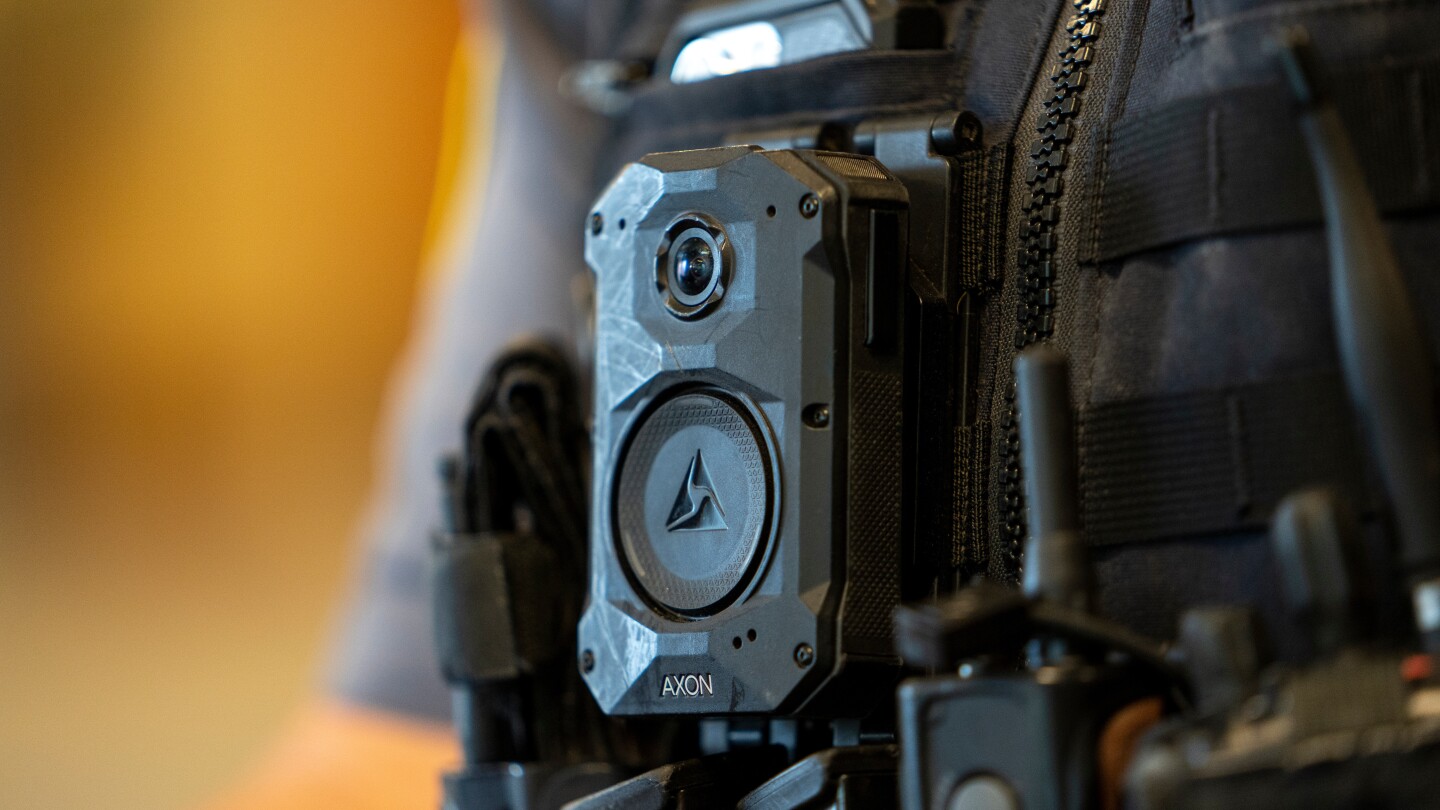
Police in Edmonton, Canada have activated a controversial pilot program that equips body cameras with artificial intelligence capable of identifying individuals from a 7,000-person “high risk” watch list, marking a significant test case for facial recognition technology in North American law enforcement.
The program, launched last week, represents a notable shift for body camera manufacturer Axon Enterprise, which had previously backed away from facial recognition technology in 2019 due to ethical concerns. Now, the Arizona-based company is moving forward with what it describes as “early-stage field research” in Edmonton, the northernmost North American city with over one million residents.
Edmonton’s system targets approximately 6,341 individuals flagged for concerns including violent behavior, weapons possession, or escape risk, plus another 724 people with outstanding serious criminal warrants, according to Kurt Martin, acting superintendent of the Edmonton Police Service.
“We really want to make sure that it’s targeted so that these are folks with serious offenses,” explained Ann-Li Cooke, Axon’s director of responsible AI.
Barry Friedman, former chair of Axon’s AI ethics board and current law professor at New York University, has voiced significant concerns about the pilot. “It’s essential not to use these technologies, which have very real costs and risks, unless there’s some clear indication of the benefits,” Friedman told The Associated Press, expressing worry about insufficient public debate and expert evaluation.
Axon CEO Rick Smith defends the approach, suggesting that testing outside the United States will provide valuable insights into both performance and necessary safeguards. “We can gather independent insights, strengthen oversight frameworks, and apply those learnings to future evaluations, including within the United States,” Smith stated in a blog post.
The stakes are particularly high given Axon’s market dominance. As the leading supplier of police body cameras in the United States, the company has expanded its reach internationally, recently outbidding competitor Motorola Solutions for a contract with the Royal Canadian Mounted Police. While Motorola acknowledged it could integrate similar technology, the company has “intentionally abstained” from deploying proactive facial recognition features, though it hasn’t ruled out future implementation.
The Alberta government mandated body cameras for all provincial police agencies in 2023, framing it as a transparency measure. However, the addition of real-time facial recognition capabilities introduces new complexities that have previously proven controversial across the political spectrum in the United States.
Previous concerns about facial recognition technology centered on documented bias in results across race, gender, and age groups, as well as reduced accuracy when analyzing video feeds compared to static images like identification cards or mugshots. These issues prompted many U.S. states and cities to restrict police use of facial recognition, while the European Union has banned real-time public facial scanning except for serious crimes like kidnapping or terrorism.
The United Kingdom, however, has embraced the technology, with London police crediting it for 1,300 arrests over the past two years. The British government is now considering nationwide expansion.
Edmonton’s pilot contains numerous limitations. It will run through December, operating only during daylight hours due to the city’s early winter darkness and harsh conditions. Officers participating in the trial won’t receive real-time alerts about matches; instead, the data will be analyzed later at police stations. Future iterations, however, could alert officers to potentially dangerous individuals nearby.
Martin emphasized that the technology will only activate when officers begin investigations or respond to calls, not during routine patrol of public spaces. “We really want to respect individuals’ rights and their privacy interests,” he stated.
Alberta’s information and privacy commissioner Diane McLeod received a privacy impact assessment from Edmonton police on December 2, the same day the program was publicly announced. Her office is currently reviewing this assessment, which is required for projects collecting “high sensitivity” personal data.
University of Alberta criminology professor Temitope Oriola noted that Edmonton serves as “a laboratory for this tool,” acknowledging potential benefits while emphasizing uncertainties. Oriola highlighted the police service’s occasionally “frosty” relationship with Indigenous and Black residents, particularly following a fatal police shooting of a South Sudanese community member last year.
Axon has faced previous controversies, including the 2022 resignation of Friedman and seven other ethics board members over concerns about a proposed Taser-equipped drone. The company maintains that facial recognition technology has “become significantly more accurate” since its earlier decision to avoid implementation, though it acknowledges persistent challenges with “factors like distance, lighting and angle, which can disproportionately impact accuracy for darker-skinned individuals.”
Friedman continues to advocate for greater transparency, public deliberation, and scientific validation before widespread deployment. “It’s not a decision to be made simply by police agencies and certainly not by vendors,” he emphasized. “A pilot is a great idea. But there’s supposed to be transparency, accountability… None of that’s here.”
Fact Checker
Verify the accuracy of this article using The Disinformation Commission analysis and real-time sources.

10 Comments
This is a complex issue with valid concerns on both sides. While public safety is paramount, the use of facial recognition on a broad ‘watch list’ raises important civil liberties questions that need to be thoroughly examined.
The shift by Axon is an interesting development, given their previous stance. It will be important to closely monitor the ‘early stage field research’ to ensure ethical issues are addressed before wider deployment.
The shift by Axon to embrace facial recognition tech after previously backing away is intriguing. I wonder what prompted the change of heart, and whether the ‘early stage’ research will uncover any unexpected challenges or concerns.
Good point. Axon’s previous stance suggests they may have had legitimate worries about the technology. The shift raises questions about their motivations and whether the concerns have been adequately addressed.
While the goal of public safety is understandable, I share concerns about the potential for abuse and overreach with this kind of broad ‘watch list’ facial recognition system. Proper oversight and rigorous safeguards will be critical.
This pilot program in Edmonton seems like a significant test case for the use of facial recognition in law enforcement. I’m curious to see how the public responds and whether there are any unintended consequences that emerge.
This seems like a concerning development for privacy and civil liberties. While public safety is important, using facial recognition on a ‘watch list’ raises questions about due process and overreach. Curious to hear more perspectives on the ethical implications.
I agree, the use of this technology on a broad ‘watch list’ is troubling. There need to be clear safeguards and oversight to prevent abuse and discrimination.
As the northernmost North American city with over 1 million residents, Edmonton’s experience with this facial recognition pilot could provide valuable insights. I’ll be interested to see how the public and local officials respond.
Curious to learn more about the specific criteria and processes used to determine who ends up on this ‘high risk’ watch list. Transparency and accountability will be key to ensuring this technology is not misused.