


Listen to the article
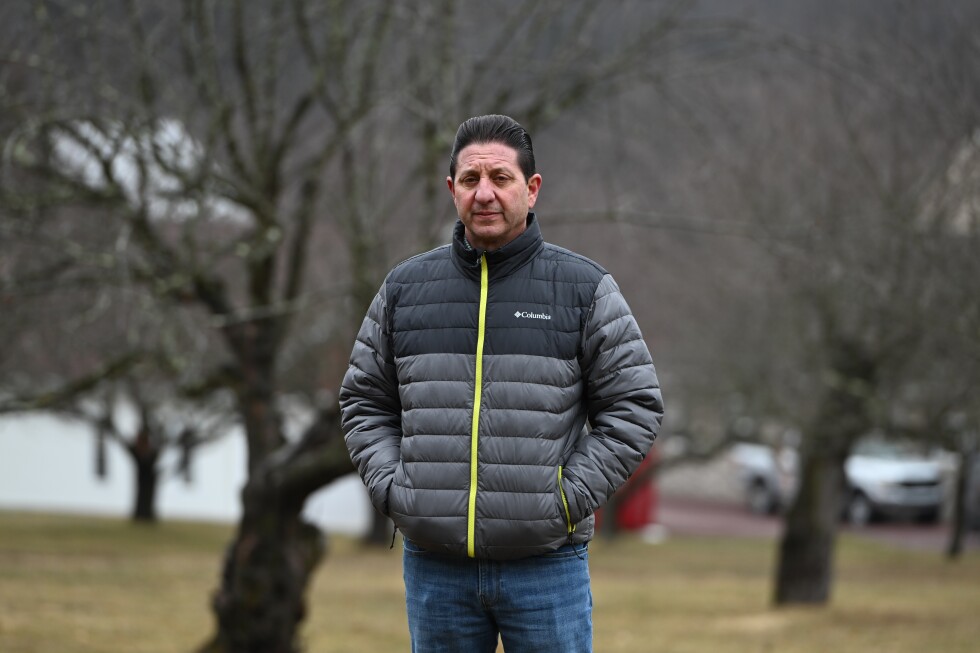
For John Zola, his 40-acre property in Sugarloaf, Pennsylvania represented a dream realized: apple orchards nestled in rolling hills, a barn, meadows, and enough land for four homes—one for himself and his wife, and one for each of his three adult children.
That dream began unraveling in late 2024 when a contractor for local power utility PPL knocked on his door with disturbing news. The company planned to build a 500-kilovolt power line directly through his property. The proposed 240-foot metal towers would stand ten times taller than his century-old apple trees, looming over his family’s homes, basketball court, and swimming pool where his grandchildren play.
“They don’t look at whose lives they are destroying, whose property they are destroying,” Zola said. “It’s been hell.”
Zola’s situation exemplifies a growing national conflict at the intersection of technological advancement and infrastructure development. Across the country, massive transmission line projects are being planned at an accelerating pace, primarily to deliver power to enormous data centers operated by major tech companies.
These aren’t ordinary local power lines on wooden poles. They’re industrial-scale infrastructure on steel towers five or six times taller than conventional utility poles, carrying bulk electricity across long distances. Some, like the Sugarloaf project threatening Zola’s property, require 200-foot-wide corridors cutting through private lands.
While artificial intelligence advancements are viewed as critical to America’s economic and national security interests, the energy needs of these technologies are straining the power grid to its limits. Caught in the middle are landowners, conservationists, and rural communities.
Utility companies are forecasting dramatic growth in transmission spending, projected to double to nearly $50 billion annually from 2019 to 2028. PPL, which serves more than 1.5 million electric customers in eastern Pennsylvania, projects its peak electricity demand will more than triple by 2030, driven largely by Amazon and other data center developments in the region.
The company argues that the 12-mile Sugarloaf project will minimize disruptions by reusing and expanding an existing corridor that once carried a residential line. They’ve offered payments to affected property owners, but landowners fear the utility will ultimately resort to eminent domain to force settlements if they refuse.
“My offer went from $17,000 to $85,000,” Zola said, describing a recent increase in PPL’s compensation offer. “Just like that. And there’s no amount of money for me.”
Similar battles are playing out nationwide. In Texas’ Hill Country, a coalition has formed to oppose construction of a 765-kilovolt line—the highest voltage used in the United States—that state regulators commissioned as part of three “superhighway” corridors crossing the state.
“Why would you choose a route that would potentially harm our most iconic rivers that we have left in the state of Texas?” asked Jada Jo Smith, founder of the Hill Country Preservation Coalition. The group is pressing regulators to adopt an alternative route following existing highway corridors.
In Pennsylvania, state consumer advocate Darryl Lawrence is challenging a $1.7 billion proposed line that would span more than 200 miles from West Virginia across half the state. Lawrence questions whether cheaper alternatives exist, whether the projected data center demand will materialize, and why grid operators want to import power into Pennsylvania, which normally exports electricity.
West Virginians are fighting proposed transmission lines connecting coal-fired power plants to northern Virginia’s “data center alley,” while in the Midwest, a $22 billion transmission package faces opposition from utility regulators in five states urging federal authorities to block it.
“I think you may see more of those,” said Todd Snitchler, president and CEO of the Electric Power Supply Association, which represents independent power plant owners. “These are real dollars and consumers are paying a lot of attention.”
The Indiana-based Midcontinent Independent System Operator counters that new lines are necessary to address growing demand from manufacturing and data centers, telling federal regulators that the need for new power transmission “has never been greater.”
Meanwhile, utilities contend that any new transmission line—even those driven primarily by data centers or industrial sites—benefits everyone by adding capacity to the grid. Some members of Congress are pushing to exempt these projects from state or environmental reviews, while some tech companies are exploring building their own power plants to avoid regulatory complications.
For John Zola, these industry trends and policy debates have a deeply personal impact. The transmission towers would stand just 100 feet from where his grandchildren sleep, permanently altering the family paradise he created.
Fact Checker
Verify the accuracy of this article using The Disinformation Commission analysis and real-time sources.

8 Comments
This highlights the tension between technological progress and preserving local environments. While the need for expanded power infrastructure is clear, the rights and livelihoods of impacted communities must be prioritized. I’m curious to see how policymakers and utilities balance these competing interests.
As someone who follows the mining and energy sectors closely, I’m not surprised to see pushback against these large-scale transmission projects. Landowners have legitimate concerns about the visual impact and disruption to their properties. Utilities need to do much more to address local community needs.
Well said. A collaborative, ‘win-win’ approach is essential here, rather than simply steamrolling over local objections.
This is a complicated issue without easy answers. The need for modernized, resilient power grids is clear, but the rights of individual landowners must also be respected. I hope to see creative solutions emerge that balance these competing priorities.
As an investor in mining and energy companies, I’m closely watching this story. Reliable, high-voltage transmission is essential for scaling up renewable power and electrification. However, the concerns of affected landowners cannot be ignored. Hopefully, creative compromise solutions can be found.
I agree. Engaging local stakeholders early and transparently will be crucial for building trust and finding mutually acceptable paths forward.
This is a complex issue with valid concerns on both sides. While expanding the power grid is crucial for our energy future, the impact on local landowners and communities must be carefully considered. I’m curious to learn more about the specific mitigation efforts and negotiations underway.
You raise a good point. A balanced approach that respects property rights while enabling necessary infrastructure investments will be key to finding a constructive solution.