


Listen to the article
Atlanta Film Industry Struggles as “Hollywood of the South” Faces Harsh Reality
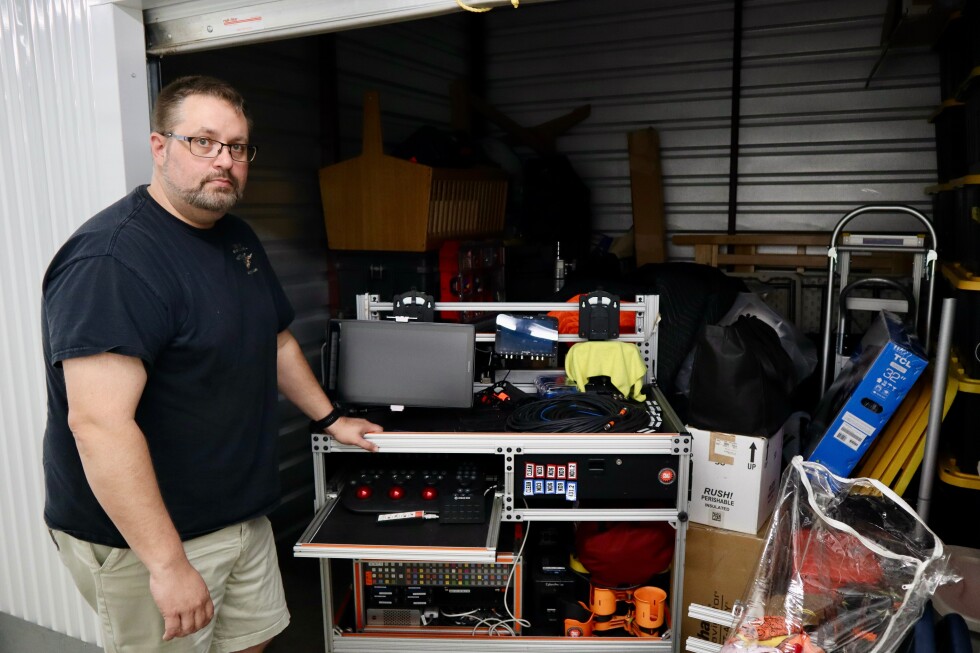
Chris Ratledge once earned as much as $9,500 a week working on Atlanta film sets. Today, the 48-year-old digital imaging technician survives on food stamps.
Ratledge moved to Georgia in 2017, drawn by the booming film industry that had transformed Atlanta into the “Hollywood of the South.” Studios, lured by generous tax credits, had made the city a backdrop for hundreds of productions including “The Hunger Games,” “Stranger Things” and over a dozen Marvel blockbusters.
“I paid off three years of back taxes in one year, just from the money I made,” recalls Ratledge, who worked on Netflix’s “Red Notice” and shows like TBS’ “Miracle Workers” and Starz’s “P-Valley.”
That prosperity has vanished. Since May 2024, Ratledge has worked just four days on set.
To support his family of five, he now works part-time at a local tennis center for $15 an hour while stringing rackets on the side. His wife, a cancer survivor, has started cleaning houses a few days weekly. They’ve downsized their home, but their $2,000 monthly income barely covers rent, leaving Ratledge in debt and battling depression.
“All I want for Christmas is for my film career back,” Ratledge wrote on Instagram in December.
Georgia’s Film Boom Goes Bust
The decline in Georgia’s film industry has been dramatic. After peaking at $4.4 billion in 2022, spending on film and TV production in the state plummeted to just $2.3 billion in the last fiscal year. Total productions dropped from 412 in 2022 to 245 last year. The decline accelerated following the 2023 writers and actors strikes, which halted productions for months and compounded an industry still recovering from COVID-19 shutdowns.
“We saw a lot of productions start looking overseas, knowing that they wouldn’t have another work stoppage,” said Lee Thomas, deputy commissioner of the Georgia Film Office. “We knew that it would be like a reset to the industry… but it certainly was a bigger, harder fall than we anticipated — and longer.”
Marvel Studios, once a major presence in Georgia, has relocated its massive productions to the United Kingdom, where labor and production costs are lower. The studio’s final Georgia-filmed project was “Thunderbolts,” scheduled for release in 2025. Streaming platforms like Netflix are also increasingly filming abroad while producing fewer shows overall.
Meanwhile, other states including California and Texas have enhanced their incentive packages to compete with Georgia’s tax credits, which can cover up to 30% of production costs.
Local industry Facebook groups reveal widespread frustration about the lack of work. Monique Younger, an Atlanta costume supervisor, says her workload has dropped by more than half, making her “feel a little bit useless.”
Jen Farris, an Atlanta native and experienced location scout, once turned down projects because she had too much work. Now she navigates two- or three-month gaps between jobs. “You just pray that you have nested away enough to float a little bit,” she said.
Training Crews for an Uncertain Future
Despite the challenging landscape, Shadowbox Studios, one of metro Atlanta’s largest soundstage operators, remains committed to the region’s future. The company has been marketing its massive spaces to everyone from indie filmmakers to content creators and esports organizers.
Mike Mosallam, Shadowbox’s COO, emphasizes that Atlanta has long been the country’s “antidote” to Hollywood blockbusters moving overseas. He points to the city’s experienced crews, comparatively lower production costs, extensive soundstage capacity, and diverse landscapes. Maintaining this talent pipeline, he believes, is crucial to preventing more productions from leaving.
In November, Shadowbox hosted about 25 Black college students for its Backlot Academy program, launched in 2022 to diversify an industry where personal connections often determine who gets hired. Veteran crew members taught participants essential skills: how to read call sheets, use walkie-talkie terminology, and endure 12-hour days on their feet.
Among the trainees was Julian Williams, a 24-year-old digital media student at Georgia Piedmont Technical College. Growing up in Atlanta, Williams watched his city transform into a playground for Hollywood — one “Alvin and the Chipmunks” movie was even filmed on his street. Now he’s determined to break into the industry as a production assistant, hoping to eventually become an assistant director.
While Williams is prepared to follow film opportunities wherever they lead, he’s betting on Atlanta’s collaborative film community. “People are genuinely helpful and willing to share what they know,” he said.
Joseph Jones, a Backlot Academy alumnus now working as a production assistant, credits the program with transforming his life. After years in the hotel industry, the 53-year-old finally fulfilled his dream of working in film.
Yet Shadowbox officials aren’t sugarcoating reality. On the day of the training, just one of the studio’s nine soundstages was booked for production. Jeremiah Cullen, director of sales, says Shadowbox has been forced to adapt by offering flexible deals to meet filmmakers’ reduced budgets while constantly reaching out to former clients.
“Hey, we miss you on the lot,” Cullen tells them. “You got anything cooking?”
Searching for a Reset
Ratledge’s love for movies began when he was nine years old, seeing his rural Indiana hometown of Milan immortalized in the 1986 film “Hoosiers.” Though he continues networking, he’s preparing to move on.
He isn’t expecting a miracle — just one steady television job that would provide enough stability to get his finances in order. A five- or six-month series, he says, would allow him to restore his health insurance, file for bankruptcy, and “hit the reset button.”
“I don’t think I’m any different than the people who worked in Detroit when the auto industry collapsed in the ’70s and everything went overseas,” he said.
The crisis has even drawn attention at the highest levels of government. Former President Donald Trump called last year for tariffs aimed at keeping film production in the U.S. — though experts have described his plan as vague and impractical.
Thomas, from the Georgia Film Office, reports that business has improved significantly from the previous fiscal year. She partially credits this rebound to new state legislation that expands Georgia’s tax incentives to cover more production types, including short-form vertical videos and free ad-supported streaming channels like Tubi.
Some Atlanta industry veterans maintain optimism. Farris, the location scout, believes the concentration of talent in Atlanta is too significant to simply disappear.
“People moved their families here. They’re raising children here. This wasn’t just about film,” she said. “It changed our landscape — it brought in brilliant new minds. Artists. Creators. And I really believe Georgia will find a way to foster an entirely new wave of artistic possibility.”
Fact Checker
Verify the accuracy of this article using The Disinformation Commission analysis and real-time sources.

9 Comments
This story highlights the precarious nature of work in the film industry, even for skilled technicians. Relying so heavily on tax incentives appears to have created a vulnerable situation.
I hope the industry and government can find ways to support workers and stabilize the film ecosystem in Georgia. It would be a shame to lose all the momentum that was built up over the years.
The transition from ‘Hollywood of the South’ to this harsh reality sounds incredibly difficult for the local workers and their families. I can understand the feelings of depression and financial stress.
It’s a stark reminder that the film industry can be an unpredictable and volatile source of employment, even in a booming production hub like Atlanta.
Wow, it’s really tough to see the Georgia film industry struggling like this after such a long period of growth. This is a harsh reality check for the ‘Hollywood of the South’.
It’s sad to hear that workers like Chris Ratledge are facing such financial hardship. The decline in production is really taking a toll on families.
This is a complex situation with a lot of factors at play – the reliance on tax incentives, the impact of the pandemic, and the inherent instability of the film industry. I wonder what lessons can be learned to build a more sustainable model going forward.
The generous tax credits that drew so many studios to Atlanta seem to have been a double-edged sword. Now the region is facing the painful consequences of that rapid growth and subsequent downturn.
I wonder what the long-term implications will be for Georgia’s economy and reputation as a film hub. This is a sobering reminder of how quickly fortunes can change in the industry.