


Listen to the article
Violence Grips Mexico’s Mountain Communities as Cartel Conflict Intensifies
Deep in the coastal mountains above Mexico’s Pacific resort city of Mazatlan, a haunting silence has fallen over towns scattered along a winding mountain road. The normally vibrant communities now stand nearly abandoned, their desertion a stark testament to the ongoing cartel violence plaguing the region.
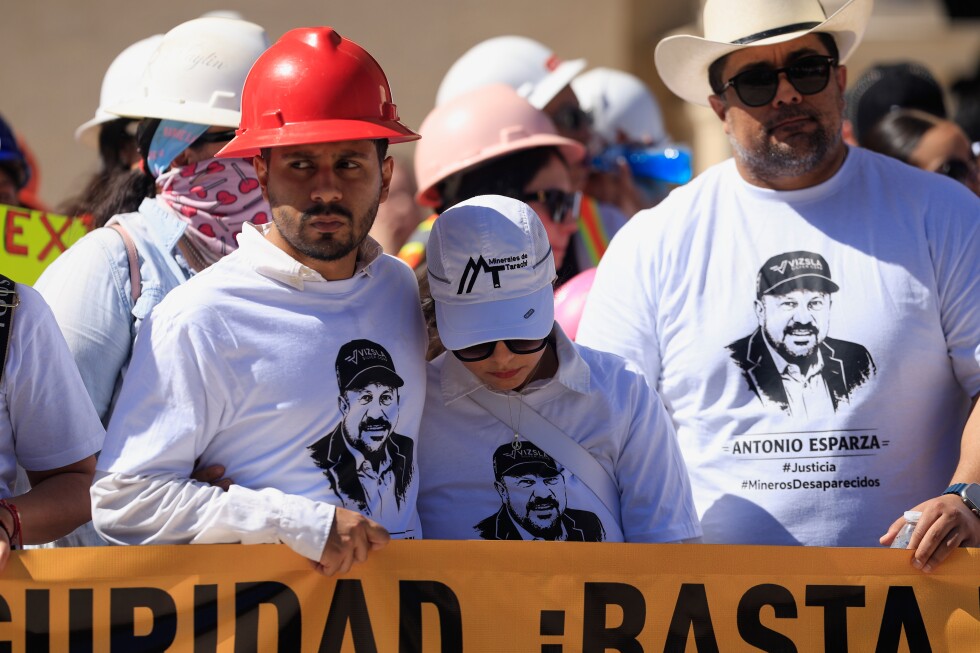
The crisis gained international attention in late January when 10 employees of a Canadian-owned silver and gold mine were abducted near the town of Panuco. The grim discovery of five bodies followed, with five more awaiting identification, highlighting the deteriorating security situation in Sinaloa state.
“Most residents have fled out of fear,” explained Fermín Labrador, a 68-year-old from the nearby village of Chirimoyos. Others, he noted, were “invited” to leave—a chilling euphemism for forced displacement as two factions of the powerful Sinaloa Cartel battle for territorial control since September 2024.
The abduction has raised pointed questions about President Claudia Sheinbaum’s security policies. Since taking office in October 2024, Sheinbaum had touted security improvements, pointing to declining homicide rates as evidence of her strategy’s effectiveness. Her administration has taken a more aggressive stance toward drug cartels in Sinaloa, conducting high-profile captures and drug seizures.
Last year, Sheinbaum deployed 10,000 National Guard troops to Mexico’s northern border in an effort to counter U.S. pressure over the cartels’ fentanyl trafficking, much of which originates in Sinaloa. However, the mine workers’ disappearance has undermined these claims of progress.
“What these kinds of episodes do is demolish the federal government’s narrative that insists they are gradually gaining control,” said security analyst David Saucedo. He criticized Sheinbaum’s approach as attempting to “manage the conflict” while the cartel war spread throughout the state, forcing residents to “take a side with one of the two groups.”
In response to the mine workers’ disappearance, Mexico’s Security Secretary Omar García Harfuch personally coordinated an intensified operation in the region. The increased military presence led to several arrests and the discovery of clandestine graves, but has provided little reassurance to local residents.
“All of the hubbub has scattered the organized crime guys,” said Roque Vargas, a human rights activist working with people displaced by violence in the area. However, he expressed concern about their potential return once attention shifts elsewhere. Locals also fear being misidentified as cartel members by security forces—a situation that has led to tragic consequences elsewhere in the state.
“We’ve practically been abandoned,” Vargas lamented, capturing the sentiment of many in these isolated communities.
The current spiral of violence began following the abduction of Sinaloa Cartel leader Ismael “El Mayo” Zambada by a son of former cartel boss Joaquín “El Chapo” Guzmán. Zambada’s subsequent handover to U.S. authorities triggered an internal war between his faction and the group led by Guzmán’s sons, known as “los Chapitos.”
The conflict initially centered in Culiacán, the state capital, but gradually engulfed the entire state. U.S. President Donald Trump’s designation of the Sinaloa Cartel as a foreign terrorist organization has intensified pressure on Sheinbaum’s administration to confront the cartels more aggressively.
Vizsla Silver Corp., the Vancouver-based owner of the mine, had previously suspended operations in April due to security concerns, though activities resumed after a month. According to García Harfuch, the arrested suspects belonged to the “los Chapitos” faction and had mistaken the workers for members of the rival group—though questions remain about how such confusion could occur at a formal mining site.
Mexican mines, along with other lucrative businesses like avocado farms and fuel pipelines, have long attracted organized crime as targets for extortion or theft. Saucedo, who has researched similar cases across Mexico, notes instances where mining companies have allegedly leveraged armed groups to suppress opposition to their operations, adding another layer of complexity to the situation.
While the Mexican government claims no knowledge of extortion targeting Vizsla, Sheinbaum has pledged discussions with mining companies throughout Mexico “to offer the support they require.” Vizsla has not responded to media inquiries, stating only that its focus remains on locating the remaining workers and supporting affected families.
In the community of El Verde, where authorities discovered the clandestine graves, Marisela Carrizales stood vigil beside banners bearing photographs of missing persons. She represents one of many search collectives that have emerged across Mexico as families seek answers for their disappeared loved ones.
“I’m here waiting for answers,” said Carrizales, who has been searching for her son Alejandro for over five years. She and more than 20 others came to monitor authorities’ work and press them to investigate additional reported grave sites in the area.
The tragedy extends beyond the mining workers. In Mazatlán, multiple disappearances have been reported in recent months, including a Mexican tourist taken from a bar in October, a businessman who vanished in January, and six Mexican tourists abducted from an upscale area of the resort city in February.
Meanwhile, in the mountain communities, daily life has virtually ceased. Teachers, doctors, and even bus drivers no longer serve these areas due to safety concerns. Labrador, from Chirimoyos, describes borrowing a friend’s motorcycle to reach his job at a highway toll booth when possible. Otherwise, he must walk more than five miles through the mountains—the local public transportation operator disappeared in December.
The stark contrast between the government’s strengthened security presence in tourist-filled Mazatlán ahead of carnival celebrations and the abandoned mountain communities illustrates the selective nature of Mexico’s security response, leaving many vulnerable communities to fend for themselves in the shadow of cartel violence.
Fact Checker
Verify the accuracy of this article using The Disinformation Commission analysis and real-time sources.

23 Comments
Production mix shifting toward Business might help margins if metals stay firm.
I like the balance sheet here—less leverage than peers.
Interesting update on Abduction of Mexican mine workers raises doubts over touted security improvements. Curious how the grades will trend next quarter.
I like the balance sheet here—less leverage than peers.
Good point. Watching costs and grades closely.
If AISC keeps dropping, this becomes investable for me.
Good point. Watching costs and grades closely.
Good point. Watching costs and grades closely.
I like the balance sheet here—less leverage than peers.
Good point. Watching costs and grades closely.
Good point. Watching costs and grades closely.
Production mix shifting toward Business might help margins if metals stay firm.
Good point. Watching costs and grades closely.
Silver leverage is strong here; beta cuts both ways though.
Nice to see insider buying—usually a good signal in this space.
Production mix shifting toward Business might help margins if metals stay firm.
Exploration results look promising, but permitting will be the key risk.
Production mix shifting toward Business might help margins if metals stay firm.
Good point. Watching costs and grades closely.
If AISC keeps dropping, this becomes investable for me.
Good point. Watching costs and grades closely.
Interesting update on Abduction of Mexican mine workers raises doubts over touted security improvements. Curious how the grades will trend next quarter.
Good point. Watching costs and grades closely.