


Listen to the article
Boeing’s 2011 Warning About Part That Failed in Deadly 2025 UPS Crash
Boeing warned plane owners in 2011 about a broken part that contributed to a UPS plane crash killing 15 people last year, but at that time didn’t consider it a safety threat, according to the National Transportation Safety Board’s Wednesday report.
The UPS cargo jet crashed in November 2025 shortly after taking off from Louisville, Kentucky, when the left engine separated from the wing during takeoff. Three pilots aboard the Hawaii-bound flight were killed, along with 12 people on the ground near Louisville’s Muhammad Ali International Airport.
The NTSB revealed that Boeing had documented four previous failures of a part that secures MD-11 engines to wings across three different aircraft back in 2011, but determined it “would not result in a safety of flight condition.” These aircraft were originally manufactured by McDonnell Douglas before Boeing acquired the company.
Investigators previously identified cracks in components connecting the engine to the wing that weren’t detected during routine maintenance, raising questions about inspection protocols. The last detailed examination of these critical engine mount parts occurred in October 2021, and the plane wasn’t scheduled for another thorough inspection for approximately 7,000 more takeoffs and landings.
The crash has drawn comparisons to a 1979 American Airlines DC-10 disaster in Chicago, where the left engine also separated during takeoff, resulting in 273 fatalities. The DC-10 was the predecessor to the MD-11 model. That incident led to a worldwide grounding of 274 DC-10s, though they eventually returned to service after investigators determined the crash resulted from improper maintenance procedures rather than a design flaw.
Jeff Guzzetti, former FAA and NTSB crash investigator, noted a significant discrepancy in how similar issues were classified over time. “A service bulletin McDonnell Douglas issued in 1980 did identify failures of the spherical bearing race as a ‘safety of flight condition,’ so it’s surprising that Boeing didn’t call it that in 2011,” said Guzzetti.
Unlike an FAA airworthiness directive that would mandate repairs, Boeing’s 2011 service bulletin only recommended actions. Alan Diehl, another former federal crash investigator, pointed out that the notice recommended replacing bearings with redesigned parts less prone to failure but still allowed operators to use older bearings that had demonstrated failure tendencies.
“As the investigation continues, the NTSB will have to address whether this service bulletin was an adequate solution to a known problem which could have had catastrophic results,” Diehl said. “The UPS crash highlights the need for increased maintenance measures on older airframes.”
The NTSB’s report included photos showing flames erupting as the engine began to detach before flying over the wing. While the investigation hasn’t yet determined the exact cause of the engine separation, investigators are clearly focused on the bearing failure.
The findings will likely feature prominently in ongoing litigation. The first lawsuit related to the crash was filed last month. “This further demonstrates there were warning signs that predated the crash that any reasonable organization should have utilized to make sure the Louisville crash didn’t happen,” said attorney Brad Cosgrove of Clifford Law firm, which filed the initial lawsuit.
Boeing, UPS, and the Federal Aviation Administration declined detailed comments during the active NTSB investigation, though both Boeing and UPS expressed condolences to the families affected by the tragedy.
“We remain profoundly saddened by the Flight 2976 accident,” said UPS spokesperson Jim Mayer. “Our thoughts continue to be with the families and Louisville community who are grieving, and we remain focused on the recovery effort.”
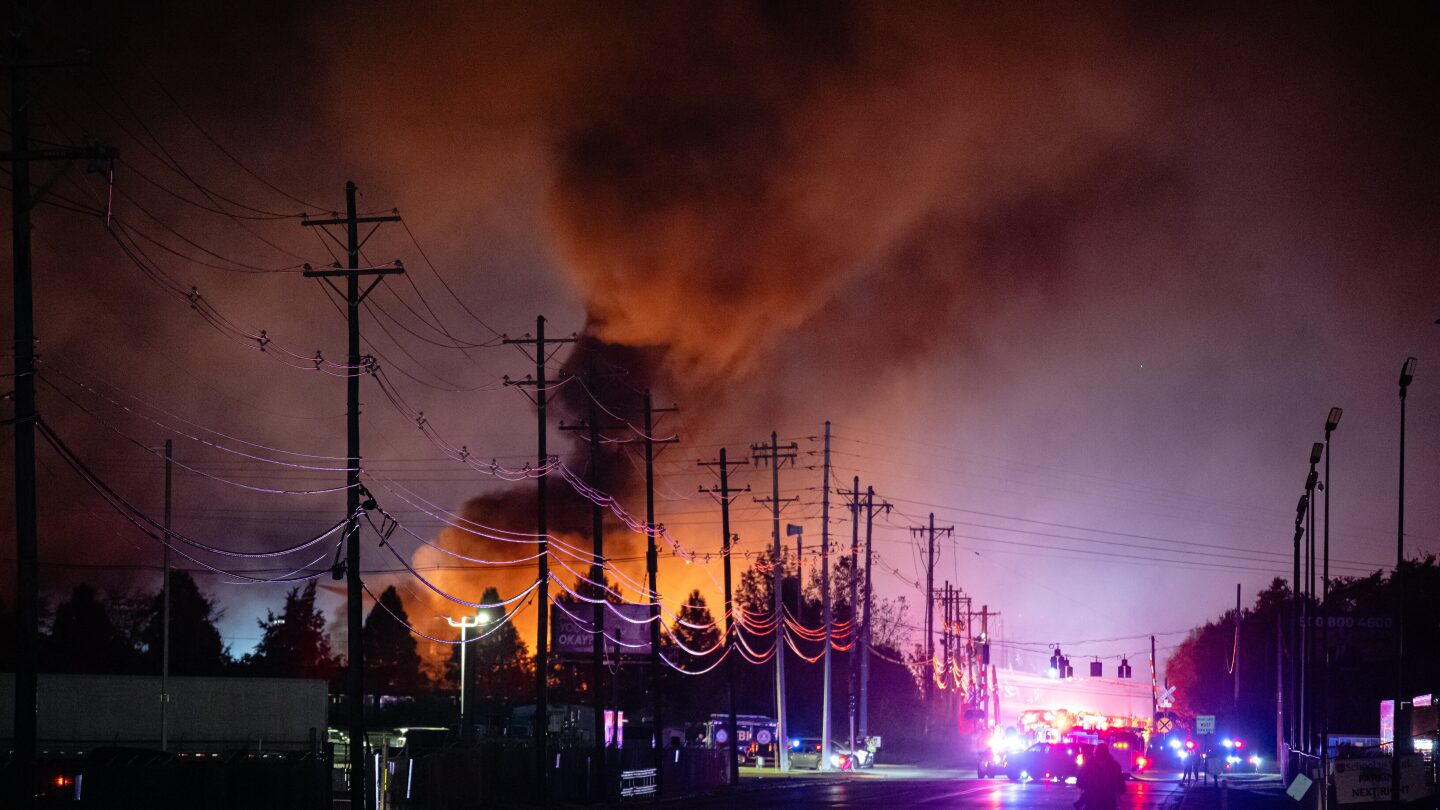
The 34-year-old MD-11 aircraft involved reached only 30 feet off the ground before crashing into industrial buildings just beyond the runway, creating a massive fireball visible for miles. Commercial airlines had retired these models years ago due to efficiency concerns, but they remained in service with cargo carriers like UPS and FedEx, with some modified for firefighting operations. All MD-11s and 10 related DC-10s have been grounded since the crash.
Cosgrove suggested the investigation may eventually conclude that these aircraft “probably should have been retired and that they had exceeded their shelf life.”
Fact Checker
Verify the accuracy of this article using The Disinformation Commission analysis and real-time sources.

8 Comments
Concerning to hear about this recurring engine mount failure issue. I hope the NTSB investigation can shed light on how to improve inspection and maintenance protocols to prevent such tragedies in the future. Engineering challenges like this are why aircraft safety is such a complex and critical endeavor.
This is a concerning revelation. The fact that a part with a known failure history was not considered a safety threat raises serious questions about the aircraft certification and risk assessment processes. Thorough, proactive evaluation of all potential failure modes is clearly essential for aviation safety.
This is a sobering reminder of the critical importance of rigorous safety protocols and continual re-evaluation of potential failure points, even for seemingly minor components. The NTSB’s findings will hopefully lead to meaningful reforms to prevent such tragedies in the future.
Absolutely. Complacency can have devastating consequences in the aviation industry. Hopefully this incident spurs a thorough review of inspection and maintenance practices to identify and address any other potential vulnerabilities.
Wow, this is a troubling development. The fact that Boeing was aware of these previous failures but didn’t view it as a safety issue is very concerning. The NTSB investigation will be crucial to determine how this oversight occurred and what steps need to be taken to ensure stronger safeguards are in place.
This is a sobering reminder that even seemingly minor parts can have catastrophic consequences if they fail. The fact that Boeing was aware of the issue years ago but didn’t consider it a safety threat raises questions about their risk assessment process. Rigorous scrutiny of all potential failure points is clearly essential.
I agree. Proactive identification and mitigation of potential failure points should be a top priority for manufacturers and regulators. Hindsight is 20/20, but lessons learned here must be applied to improve safety standards going forward.
Tragic that a known failure mode was not adequately addressed, leading to this devastating crash. The NTSB investigation will be crucial to understand how this oversight occurred and what systemic changes are needed to prevent similar issues with other aircraft components.