


Listen to the article
A new trade agreement between Indonesia and the United States has fundamentally reshaped their economic relationship, aligning Jakarta’s abundant natural resources more closely with Washington’s strategic priorities in the Indo-Pacific region.
The pact, signed amid increasing global competition for critical minerals and energy resources, grants American investors greater access to Indonesia’s mining sector while reducing threatened U.S. tariffs on Indonesian goods from 32% to 19%. It also establishes zero-tariff entry for key Indonesian exports including palm oil, coffee, cocoa, spices, and rubber.
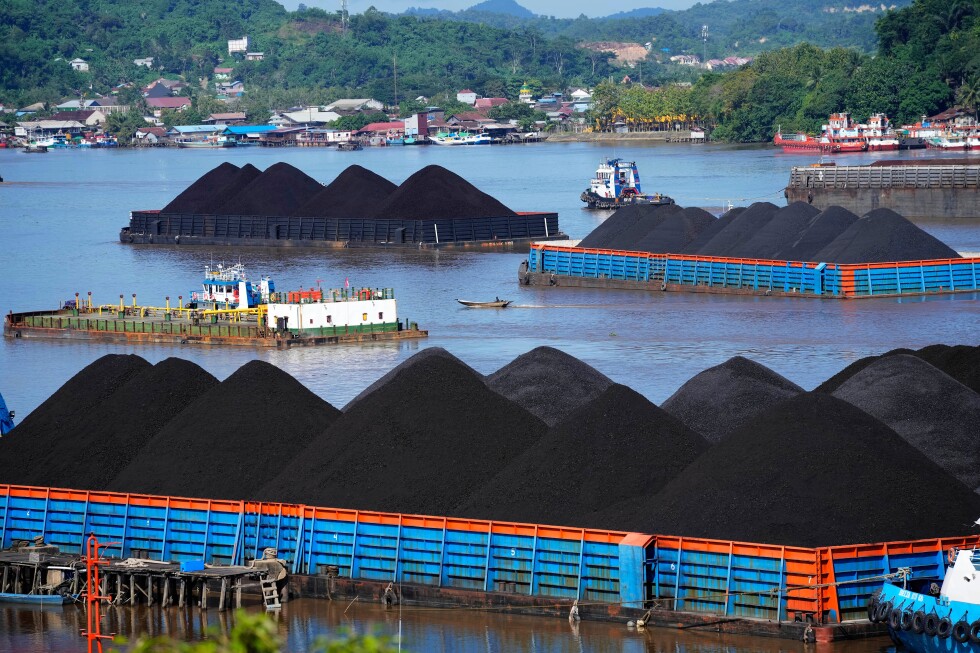
In exchange, Indonesia has committed to purchasing approximately $15 billion in American energy commodities, primarily fossil fuels such as liquefied petroleum gas, crude oil, and gasoline. The Southeast Asian nation has also agreed to invest in developing a coal export corridor from the U.S. West Coast to enhance the competitiveness of American coal in global markets.
“The leadership of Indonesia is trying to tread a fine line between the West and China,” said Putra Adhiguna of the Jakarta-based Energy Shift Institute, noting that Chinese influence remains “inescapable” as Indonesia’s largest trading partner.
The agreement comes at a critical juncture in the global race for minerals essential to clean energy technologies. Indonesia, the world’s largest nickel producer, possesses vast reserves of resources crucial for electric vehicles and renewable energy systems. The deal stipulates that U.S. investors will receive treatment “no less favorable” than domestic firms in many cases, potentially countering China’s significant head start in Indonesia’s mineral processing sector.
“Indonesia is absolutely central to this competition because it combines resource endowment with political ambition,” explained Kevin Zongzhe Li from the Center for China Analysis at the Asia Society Policy Institute. The agreement “opens the door for U.S. firms to have a real shot” at “modestly leveling a sector where Chinese industries established first mover advantage.”
The trade pact also signals a shift in energy transition policies. Unlike previous U.S.-Indonesia cooperation focused on reducing climate change-causing emissions, the current agreement emphasizes fossil fuel commerce. Indonesia has pledged to collaborate with the U.S. and Japan on deploying small modular nuclear reactors, beginning with a potential project in West Kalimantan.
This pivot comes after the U.S. withdrawal from the Just Energy Transition Partnership (JETP), a multi-billion dollar initiative where wealthy nations had promised support for Indonesia’s transition away from coal. Despite this setback, Indonesian officials maintain that the $21.4 billion partnership will continue, with approximately $3.4 billion already received as of January.
Energy analysts worry that the new deal might slow Indonesia’s progress in renewable energy development. Over the past five years, Indonesia has installed less than 1 gigawatt of solar energy, significantly lagging behind regional neighbors like Vietnam (2 GW) and India (nearly 60 GW). Fossil fuels currently constitute approximately 78% of Indonesia’s energy mix, according to the International Energy Agency.
“There is the risk that the political leadership of Indonesia is going to fall back into that hole,” Adhiguna cautioned, referring to continued fossil fuel dependence rather than accelerating renewable adoption.
The agreement’s implementation now faces uncertainty following a recent U.S. Supreme Court ruling against sweeping global tariffs, which directly impacts the framework of the deal. Additionally, the pact requires ratification by Indonesia’s parliament before taking effect.
Some provisions have already drawn criticism domestically, particularly those seen as weakening Indonesia’s halal certification requirements—an important consideration in the predominantly Muslim nation of nearly 288 million people.
“Parliamentary approval could be an uphill battle and added uncertainty from the U.S. side may complicate things further,” said Mehu Sitepu with The Asia Group, a Washington-based strategic advisory firm.
Meanwhile, other export-dependent Southeast Asian economies, particularly Vietnam, are closely monitoring the Indonesia-U.S. trade agreement for insights into the concessions Washington might demand in their own negotiations. The deal represents a significant development in the ongoing economic competition between the U.S. and China for influence in Southeast Asia, a region increasingly caught between the strategic priorities of both superpowers.
Fact Checker
Verify the accuracy of this article using The Disinformation Commission analysis and real-time sources.

32 Comments
Interesting update on A new US trade deal with Indonesia secures fossil fuels and access to critical minerals. Curious how the grades will trend next quarter.
Good point. Watching costs and grades closely.
Silver leverage is strong here; beta cuts both ways though.
Good point. Watching costs and grades closely.
The cost guidance is better than expected. If they deliver, the stock could rerate.
Good point. Watching costs and grades closely.
Good point. Watching costs and grades closely.
Interesting update on A new US trade deal with Indonesia secures fossil fuels and access to critical minerals. Curious how the grades will trend next quarter.
Good point. Watching costs and grades closely.
Good point. Watching costs and grades closely.
Uranium names keep pushing higher—supply still tight into 2026.
Nice to see insider buying—usually a good signal in this space.
Silver leverage is strong here; beta cuts both ways though.
Good point. Watching costs and grades closely.
Good point. Watching costs and grades closely.
If AISC keeps dropping, this becomes investable for me.
I like the balance sheet here—less leverage than peers.
Nice to see insider buying—usually a good signal in this space.
Good point. Watching costs and grades closely.
Good point. Watching costs and grades closely.
The cost guidance is better than expected. If they deliver, the stock could rerate.
If AISC keeps dropping, this becomes investable for me.
Good point. Watching costs and grades closely.
Good point. Watching costs and grades closely.
I like the balance sheet here—less leverage than peers.
Good point. Watching costs and grades closely.
Uranium names keep pushing higher—supply still tight into 2026.
Good point. Watching costs and grades closely.
Good point. Watching costs and grades closely.
Interesting update on A new US trade deal with Indonesia secures fossil fuels and access to critical minerals. Curious how the grades will trend next quarter.
Good point. Watching costs and grades closely.
Good point. Watching costs and grades closely.