


Listen to the article
As media organizations go, NewsGuard cuts a low public profile while pursuing its mission of issuing credibility ratings about news outlets. But the Trump administration has taken notice, and the company has joined a growing list of journalism organizations facing White House scrutiny.
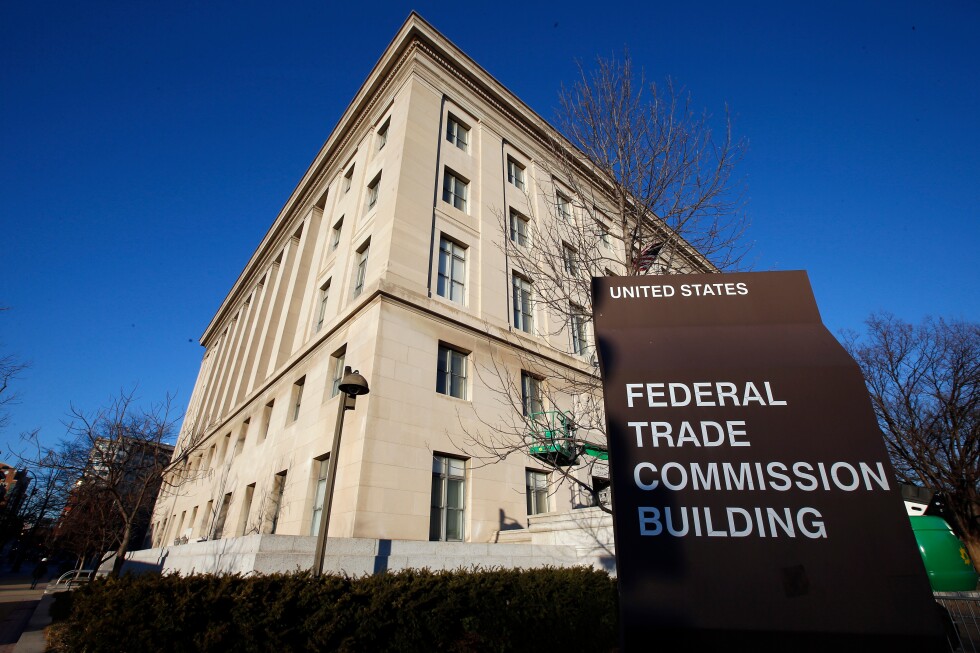
A dispute between President Donald Trump’s regulators and the news monitoring service has escalated to the courts, with NewsGuard Technologies suing the Federal Trade Commission and its chairman, Andrew Ferguson, to halt an investigation. The FTC accuses the company of trying to suppress conservative speech, while NewsGuard contends it’s being forced to submit to vindictive power.
Since Trump returned to office in January 2025, his Republican administration has engaged in multiple legal battles with major media organizations. The administration has fought The Associated Press over the outlet’s Gulf of Mexico naming practices, settled with CBS News’ parent company in a dispute over “60 Minutes” editing, sued The Wall Street Journal for its reporting on Trump and Jeffrey Epstein, and remains in a legal fight with The New York Times over Pentagon reporting restrictions.
NewsGuard’s lawsuit, filed last month in U.S. District Court in the District of Columbia, accuses Trump’s FTC of “brazenly using its power not for any issue concerning trade or commerce but rather to censor speech simply because it disagreed with NewsGuard’s judgments about the reliability of news sources.”
The FTC dismisses these accusations as “untethered from both law and fact.”
Like the Federal Communications Commission under Brendan Carr, Ferguson’s FTC has transformed from a typically quiet federal agency into an active entity addressing issues important to Trump and his supporters, particularly involving media. The FCC has launched investigations of media companies and recently suggested enforcing “equal time” rules for political guests on television talk shows.
Ferguson has been transparent about his priorities, stating in a July interview: “I am a law enforcer, and I will follow the law. But the policy priorities are set by the man the people chose to run this government.”
The liberal lobbying group Media Matters for America has also faced FTC scrutiny. Last summer, a federal judge halted an investigation into the group’s efforts to promote advertising boycotts, ruling that the inquiry violated the organization’s free speech rights.
While NewsGuard may not be widely known to the public, its business model affects news outlets’ financial prospects. Founded in 2018 by Court TV creator Steven Brill and former Wall Street Journal publisher Gordon Crovitz, NewsGuard employs journalists to evaluate thousands of news outlets and websites, assigning ratings based on journalistic credibility and reliability.
The company charges $4.95 for monthly subscriptions. Its primary revenue comes from advising advertisers about which news sites might damage their brands and from artificial intelligence companies seeking reliable information sources.
NewsGuard’s troubles began after it gave the Trump-friendly television network Newsmax a score of 20 out of a possible 100, stating “this website is unreliable because it severely violates basic journalism standards.” According to NewsGuard’s lawsuit, Newsmax has since repeatedly urged Republican lawmakers and regulators to take action against the rating service.
Newsmax spokesman Bill Daddi challenged NewsGuard’s objectivity, saying: “NewsGuard was started by Steve Brill to target conservative media and get ad agencies to deny them advertising revenue as a means of censorship. Brill is a Democratic Party activist and donor over many decades with a long history of advocating for liberal causes.”
Brill disputes this characterization, stating his only political activity was working for Republican John Lindsay, New York City’s mayor in the late 1960s and early 1970s, while he was a college and law school student. “I have been a journalist ever since,” Brill said, adding that he has not donated to politicians.
NewsGuard maintains that its ratings follow clearly defined criteria, including whether outlets publish false information, distort arguments, use multiple sources, distinguish between news and opinion, and correct errors. The company points to instances where Fox News received higher ratings than MSNBC as evidence of its political neutrality.
However, the conservative Media Research Center has published studies suggesting NewsGuard tends to give higher ratings to liberal-leaning outlets. In court documents, the FTC stated it began investigating NewsGuard because congressional investigators linked the company’s services to “coordinated actions to demonize disfavored media entities.”
The agency has demanded extensive internal documents, emails, financial reports, and subscriber lists dating back to NewsGuard’s founding. Beyond the financial burden of compliance, the company fears regulators will use this information to target its subscribers.
In a significant move affecting NewsGuard’s business model, the FTC prohibited the newly merged media buying firms Omnicom and IPG from using services that review and rate news sites as a condition for approving their merger. The agency described this restriction as preventing advertising decisions based on politics. NewsGuard claims this action has already cost them business.
“The whole idea that any speaker has to justify to the government that it’s not biased is a really troubling thought,” Brill said. “We have a constitutional right to be biased. It just so happens that we started the company on the core principle that we were going to be totally apolitical.”
The FTC defended its actions in court filings, stating it was conducting a broader investigation into whether advertiser boycotts violated antitrust laws and had issued similar information requests to more than a dozen organizations. The agency called NewsGuard’s charges “completely meritless” and questioned why the company waited eight months to file suit.
“We tried to cooperate in the belief that the more that we told them what we do, the more likely it would be that they would decide that they didn’t have any case,” Brill explained. “We soon realized that they weren’t worried about the merits.”
NewsGuard argues the FTC actions “will continue until NewsGuard knuckles under.” When asked if he believed the government agency aimed to put his company out of business, Brill declined to comment.
Fact Checker
Verify the accuracy of this article using The Disinformation Commission analysis and real-time sources.

8 Comments
The Trump administration’s legal battles with major media outlets are quite troubling. A free and independent press is a cornerstone of democracy, and attempts to undermine that are very worrying. NewsGuard seems to be caught in the crossfire here.
The Trump administration’s pattern of legal battles with major media outlets is quite concerning. Regardless of one’s political leanings, undermining the independence of the press is a dangerous precedent. I’ll be following this NewsGuard case closely.
This dispute highlights the delicate balance between press freedom and government oversight. While the administration may have legitimate concerns, strong-arming a media rating company is not a good look. I hope the courts can provide clarity and uphold the principles of a free press.
This is an interesting development in the ongoing tensions between the Trump administration and media organizations. It’s concerning to see the government trying to exert pressure on a company like NewsGuard that aims to provide credible ratings of news sources.
This is a complex issue without easy answers. While I appreciate NewsGuard’s mission, the government’s concerns about potential bias also warrant consideration. I hope the courts can provide a balanced and fair resolution that upholds the principles of press freedom.
I’m curious to learn more about the FTC’s specific allegations against NewsGuard. While media scrutiny is important, the government shouldn’t be overstepping its bounds or trying to suppress legitimate journalism. This case bears watching closely.
I have mixed feelings about this situation. On one hand, I appreciate NewsGuard’s efforts to bring transparency and accountability to news reporting. But the government’s actions also raise valid concerns about potential overreach. This is a complex issue without easy answers.
It’s troubling to see the government apparently using its power to target a company like NewsGuard that is trying to provide transparency around news sources. This feels like a worrying escalation in the ongoing tensions between the administration and the media.