


Listen to the article
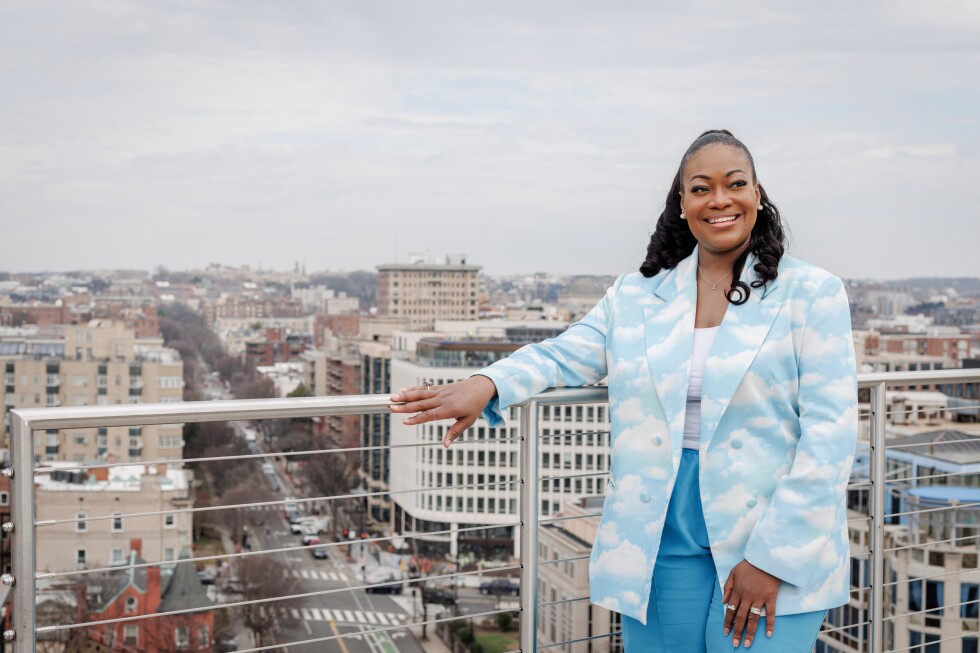
Michele Jawando Named CEO of Omidyar Network, Aims to Democratize AI Development
Michele Jawando will take over as CEO of the Omidyar Network next month, positioning the philanthropic organization to expand its influence in shaping the future of artificial intelligence. The announcement came Wednesday as the organization, founded by eBay billionaire Pierre Omidyar, continues its mission to broaden access to economic opportunities created by the digital revolution.
Jawando, currently serving as the network’s president, brings a background in civil rights law and experience as a Google executive managing public policy partnerships. She will lead one of the most financially robust technology organizations working to diversify the development, deployment, and regulation of AI beyond Silicon Valley’s dominant influence.
“Our focus will be making sure that there is a much more diverse set of views and people and coalitions and voices shaping the moments, the opportunities and the rules for the AI era,” Jawando said. “I just want people to feel agency and power in this moment. I hate the fact that most people feel like this technology is happening to them.”
The timing of Jawando’s appointment comes during a challenging period for the tech governance sector. This week, the Trump administration reportedly retaliated against Anthropic, an AI company that refused to grant the government unrestricted military use of its technology. The incident highlights the tensions between private AI developers, government interests, and public welfare advocates.
Such conflicts underscore Jawando’s position that AI guardrails shouldn’t be determined by a small group of powerful tech companies. Under her leadership, the Omidyar Network has refined its focus toward addressing gaps in philanthropy’s engagement with rapidly evolving AI technologies, assembling a $30 million portfolio of investments in generative AI projects in recent years.
Despite acknowledging the “David and Goliath kind of asymmetry” in resources between philanthropy and tech giants valued in the hundreds of billions, Jawando emphasized her role in building coalitions across the philanthropic sector to amplify the perspectives of working people.
“The responsible and safe use of AI shouldn’t be just one company’s mantra,” Jawando stated. “It’s not that some companies are too responsible and others aren’t. It’s just that we don’t have a public governance framework.”
Outgoing CEO Mike Kubzansky highlighted Jawando’s achievements in spearheading a philanthropic coalition that has committed $500 million toward AI development that prioritizes public interests. Her leadership brought in several funders previously less active in the AI space, including the Doris Duke Foundation and the Lumina Foundation.
“She rarely jumps to the oppositional card first,” Kubzansky said. “She finds new partners for us and she brings people along.”
As CEO, Jawando plans to intensify the organization’s efforts to consult underrepresented communities, influence state legislation, and support research that applies AI technology for everyday people’s benefit. This includes partnerships with advocacy groups like the Model Alliance, which successfully championed New York State legislation requiring fashion workers’ consent for digital replicas of their likenesses.
The Omidyar Network will continue supporting leaders from overlooked populations, such as Fallon Wilson, co-founder of the #BlackTechFutures Research Institute, who works with HBCUs and African American churches on AI literacy. The organization also intends to maintain its backing of tech regulation advocates despite recent executive orders from the Trump administration that limit state-level AI guardrails.
As concerns grow over energy-intensive data centers expanding in size and number, Jawando noted the network’s interest in identifying models for responsible data centers that consider carbon neutrality and community engagement. Additionally, the organization funds AI researchers focused on advancing areas like healthcare rather than business-to-business services.
Shannon Farley, executive director of Fast Forward, an accelerator for tech-focused nonprofits, expressed hope that other funders would follow Omidyar Network’s lead in addressing AI’s rapid advancement. She praised Jawando’s collaborative approach and the organization’s status as an early “tech for good” investor.
“We’re asking nonprofits to solve 21st-century problems with 20th-century tech,” Farley said. “They can’t do that if funders aren’t understanding AI and backing people with lived experience to solve the problems in front of them.”
The Omidyar Network’s leadership transition signals a continued commitment to ensuring that AI development benefits society broadly rather than concentrating power in a handful of technology companies.
Fact Checker
Verify the accuracy of this article using The Disinformation Commission analysis and real-time sources.

8 Comments
Uranium names keep pushing higher—supply still tight into 2026.
Nice to see insider buying—usually a good signal in this space.
Good point. Watching costs and grades closely.
Good point. Watching costs and grades closely.
Production mix shifting toward Business might help margins if metals stay firm.
Exploration results look promising, but permitting will be the key risk.
Exploration results look promising, but permitting will be the key risk.
If AISC keeps dropping, this becomes investable for me.