


Listen to the article
As he watched the Boston Celtics play from the stands of TD Garden, one noise kept catching Adel Djellouli’s ear.
“This squeaking sound when players are sliding on the floor is omnipresent,” he said. “It’s always there, right?”
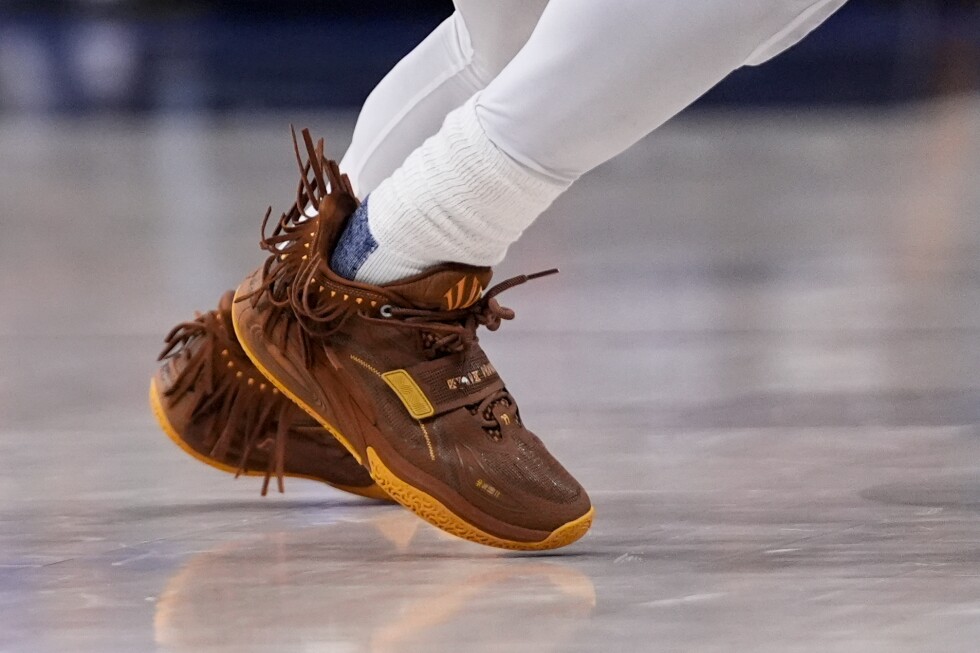
That distinctive squeak of basketball shoes against hardwood has become an integral part of the game’s auditory experience. For players and fans alike, the sound serves as a constant backdrop to the action – a sonic signature of quick cuts, defensive slides, and sudden changes in direction.
Djellouli, a materials scientist at Harvard University, transformed his casual observation into a full-fledged scientific inquiry. What exactly causes that iconic sound? The question led to groundbreaking research that was published Wednesday in the prestigious journal Nature.
To solve the mystery, Djellouli and his research team devised a straightforward yet effective experiment. They repeatedly slid a sneaker against a smooth glass plate while recording the sound with a microphone. Simultaneously, they captured the interaction using high-speed cameras to observe what happened at the interface between shoe and surface.
The findings revealed a fascinating physical phenomenon. As athletes move across the court, tiny sections of their shoe soles momentarily lose contact with the floor before regaining it – thousands of times per second. This rapid sequence of detachment and reattachment creates microscopic ripples or wrinkles that travel through the rubber sole.
“That squeaking is basically your shoe rippling, or creating wrinkles that travel super fast. They repeat at a high frequency, and this is why you get that squeaky noise,” Djellouli explained.
The team’s experiments demonstrated that the distinctive tread patterns on basketball shoes play a crucial role in generating the characteristic sound. When researchers tested featureless blocks of flat rubber against glass, they observed chaotic, disorganized ripples but heard no squeaks. This suggests that the ridge-like designs on athletic shoe soles organize these micro-movements into patterns that produce the clear, high-pitched sound basketball fans recognize worldwide.
While previous studies have examined similar friction-based phenomena, this research stands apart by focusing on much higher speeds and establishing a direct connection between these rapid pulses and the resulting acoustic output.
The implications extend far beyond basketball courts. As physicist Bart Weber noted in an editorial accompanying the research, “Friction is one of the oldest and most intricate problems in physics,” yet despite its everyday presence, it remains “difficult to predict and control.”
A deeper understanding of friction mechanics could inform multiple fields of study. Geologists might apply these insights to better comprehend how tectonic plates slide and interact during earthquakes. Engineers could develop methods to reduce friction and wear in machinery, potentially saving energy and extending equipment lifespan.
For everyday consumers, the research might eventually lead to practical applications – like designing shoes that don’t squeak in inappropriate settings such as quiet office hallways or libraries. While the current study doesn’t offer immediate solutions to unwanted squeaking (though internet remedies like rubbing soap or dryer sheets on soles abound), it provides foundational knowledge that could inform future footwear design.
One particularly intriguing experiment revealed that altering the rubber thickness affected the pitch of the squeak. This discovery suggests the possibility of engineering shoes that produce sounds at frequencies beyond human hearing range.
“We can now start designing for it,” said Weber, who is affiliated with the Advanced Research Center for Nanolithography and the University of Amsterdam. “We can start making interfaces that either do it if we want to hear this sound, or don’t do it if we don’t want to hear it.”
For basketball purists, however, the familiar squeak might remain an essential element of the game’s atmosphere – a sound as fundamental to the sport as the swish of the net or the bounce of the ball.
The research serves as a reminder that even the most familiar aspects of our daily experience can contain unexplored scientific mysteries waiting to be unraveled.
Fact Checker
Verify the accuracy of this article using The Disinformation Commission analysis and real-time sources.

10 Comments
Clever use of a sports observation to drive materials science research. The squeak may be background noise to fans, but it’s clearly a rich area for investigation. Curious to see if the findings could apply to other sliding surface interactions.
The sneaker squeak – an unsung hero of the basketball experience. Glad to see this acoustical phenomenon get the attention it deserves through rigorous research. Looking forward to learning more about the underlying mechanics.
Love the creative, interdisciplinary approach of using a basketball game observation to inspire scientific inquiry. Can’t wait to read the full Nature paper and learn the details of this sneaker squeak mystery solved.
Agreed, merging sports and materials science is a clever way to tackle an everyday phenomenon. Kudos to the research team for turning a casual observation into rigorous, publishable work.
Ah, the sounds of basketball – an integral part of the game experience. Nice to see this ubiquitous noise get the scientific treatment it deserves. Looking forward to understanding the physics behind that satisfying squeak.
The ubiquitous sneaker squeak – an auditory signature of the game. Kudos to the researchers for taking a closer look at this overlooked phenomenon. Excited to dive into the technical details on what causes that satisfying sound.
Neat that a casual courtside observation sparked this in-depth study on the physics of the basketball sneaker squeak. Nice to see science tackling the little things that make sports so immersive and memorable.
Huh, who knew there was such an intriguing story behind the common sneaker squeak? Seems like a fun, accessible way to showcase materials science research. Curious to see if there are any potential real-world applications from this work.
Good point. Even mundane noises can reveal fascinating insights when examined closely. This study shows the value of applying a scientific lens to everyday phenomena.
Fascinating research into the science behind that iconic squeak! Always wondered about the physics of it. Curious to hear more about the high-speed camera analysis and how it revealed the sneaker-floor interaction.