


Listen to the article
U.S. Allows India Temporary Relief on Russian Oil Purchases Amid Iran Conflict
The U.S. Treasury Department has granted India a 30-day window to continue purchasing Russian oil until April 4, a decision highlighting the complex interplay between global conflicts and energy markets. This temporary exemption comes as the widening conflict in Iran disrupts traditional oil supply chains and inadvertently boosts Russia’s war chest for its ongoing invasion of Ukraine.
Treasury Secretary Scott Bessent characterized the measure as a “stop-gap” intended to “alleviate pressure caused by Iran’s attempt to take global energy hostage.” According to Bessent, the waiver only applies to Russian oil already stranded on tankers—estimated at approximately 125 million barrels of crude—and would “not provide significant financial benefit” to Moscow.
The decision marks a shift from recent U.S. policy. President Donald Trump had previously imposed 25% tariffs on India for continuing to purchase Russian oil, which were lifted on February 6 after what Trump described as a promise from India to cease buying Russian crude.
China and India emerged as Russia’s primary oil customers following Moscow’s 2022 invasion of Ukraine, which triggered a boycott by the European Union—previously Russia’s largest oil importer. Western sanctions on Russia’s “shadow fleet” of tankers and against major companies Rosneft and Lukoil had successfully diminished the Kremlin’s energy revenue until recent events changed market dynamics.
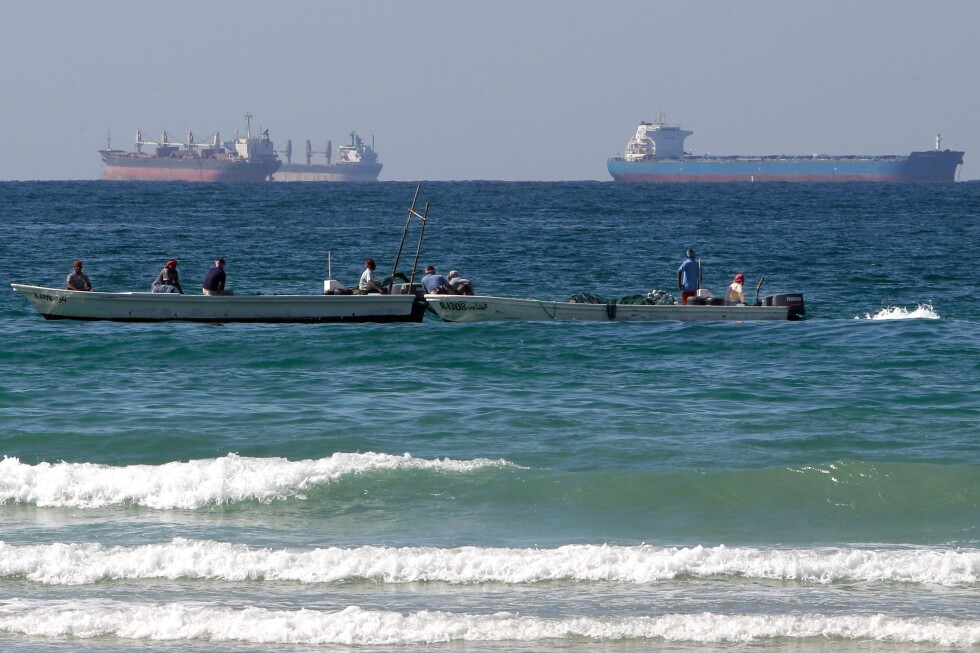
The conflict in Iran has dramatically altered global oil market conditions. The Strait of Hormuz—a critical shipping lane bordered by Iran that facilitates transportation of 20% of the world’s oil needs—has effectively shut down due to the threat of Iranian missile or drone attacks. Tanker traffic carrying oil and gas from Saudi Arabia, Kuwait, Iraq, Qatar, Bahrain, the UAE, and Iran has virtually ceased.
This disruption has sent oil prices soaring. International benchmark Brent crude reached $89 per barrel on Friday, a significant increase from just under $73 before the outbreak of hostilities in the Middle East. Russia’s Urals blend export price has climbed to $70 per barrel, up from below $40 as recently as December.
For the Russian government, which relies on oil and gas taxes for 20-30% of its federal budget, this price surge represents a potential windfall. Russian crude is now trading well above the $59 per barrel benchmark that the Russian Finance Ministry had projected in its 2026 budget. With production costs of approximately $15 per barrel, higher prices directly boost government revenue.
The timing is particularly beneficial for the Kremlin, which had seen state oil and gas revenue fall to a four-year low of 393 billion rubles ($5 billion) in January. The budget shortfall for that month reached a record 1.7 trillion rubles ($21.8 billion), according to Finance Ministry figures. Economic growth in Russia has stagnated despite massive military spending, forcing President Vladimir Putin to implement tax increases and increase borrowing from domestic banks to maintain state finances during the fifth year of the Ukraine war.
The disruption extends beyond oil to natural gas markets. Qatar, a major supplier of liquefied natural gas (LNG), suspended production after an Iranian drone strike on its largest LNG facility. This has intensified global competition for available supplies, including those from Russia, and driven up future delivery prices in Europe—complicating EU plans to end remaining Russian gas imports by 2027.
When asked about the U.S. waiver, Kremlin spokesman Dmitry Peskov emphasized increasing demand for Russian energy resources amid the Iran conflict. “India and China are guided by their national interests, and we do the same,” Peskov stated. “We continue our cooperation, including the energy field and energy trade, with India and China.”
Analysts note that the duration of the Iran conflict will determine the extent of Russia’s benefit. A quick resolution could see oil prices rapidly return to pre-war levels around $65 per barrel, limiting Russia’s gains. However, a prolonged conflict—particularly one causing lasting damage to oil infrastructure in Saudi Arabia, Iraq, the UAE, and Kuwait—could push prices above $100 per barrel, delivering a sustained financial boost to Moscow at a critical time in its Ukraine war efforts.
Fact Checker
Verify the accuracy of this article using The Disinformation Commission analysis and real-time sources.

18 Comments
This temporary relief for India on Russian oil purchases is a curious development. I wonder how it will affect the global energy markets and the ongoing efforts to pressure Russia over its invasion of Ukraine.
A valid point. The U.S. will need to carefully weigh the potential implications of this move, both in terms of its impact on Russia’s finances and the broader geopolitical dynamics at play.
Interesting move by the U.S. to grant India temporary relief on Russian oil purchases amid the Iran conflict. Curious to see how this impacts global energy markets and the broader geopolitical dynamics at play.
It’s a delicate balancing act, trying to manage the ripple effects of the Iran situation while maintaining pressure on Russia. This temporary exemption seems designed to provide some short-term relief.
The U.S. decision to allow India to continue buying Russian oil for a month is an interesting move. It highlights the complex tradeoffs and considerations involved in managing global energy security and responding to geopolitical crises.
Absolutely. Policymakers are likely trying to strike a balance between maintaining pressure on Russia and mitigating the disruptive effects of the Iran conflict on energy markets. It will be worth monitoring how this unfolds.
It’s intriguing to see the U.S. provide this temporary relief to India on Russian oil purchases. This speaks to the challenges of maintaining a cohesive global sanctions regime in the face of shifting energy dynamics.
Agreed. The global energy landscape is in flux, and policymakers are having to adapt their approaches accordingly. This decision highlights the need for nuanced, flexible strategies.
This temporary exemption for India on Russian oil purchases is a curious development. I wonder how it will impact the broader efforts to isolate Russia economically and the global energy landscape more broadly.
A valid point. The U.S. will need to carefully weigh the potential implications of this move, both in terms of its impact on Russia’s finances and the broader geopolitical dynamics at play.
The U.S. decision to grant India a 30-day window to continue buying Russian oil highlights the delicate geopolitical balancing act at play. It will be important to monitor how this evolves in the coming weeks and months.
Absolutely. This move underscores the complex interdependencies and tradeoffs that policymakers must navigate in the face of competing global crises and energy security concerns.
This temporary exemption for India on Russian oil purchases is a curious development. I wonder how it will impact the broader efforts to isolate Russia economically over its invasion of Ukraine.
A valid point. The U.S. will need to carefully balance its strategic objectives regarding Russia and Iran while also considering the practical realities of global energy supply and demand.
The U.S. decision to grant India a 30-day exemption on Russian oil purchases is a pragmatic move, but it will be interesting to see how it impacts the broader efforts to isolate Russia economically.
Definitely a complex issue. The U.S. is likely trying to balance its strategic objectives with the practical realities of global energy supply and demand. It will be a delicate balancing act going forward.
The U.S. decision to allow India to continue buying Russian oil for a month is likely a pragmatic move to mitigate the disruption caused by the Iran conflict. It will be interesting to see how this plays out in the long run.
Agreed. The global energy landscape is highly complex, and these temporary waivers demonstrate the need for nuanced policymaking that accounts for various competing interests and priorities.