


Listen to the article
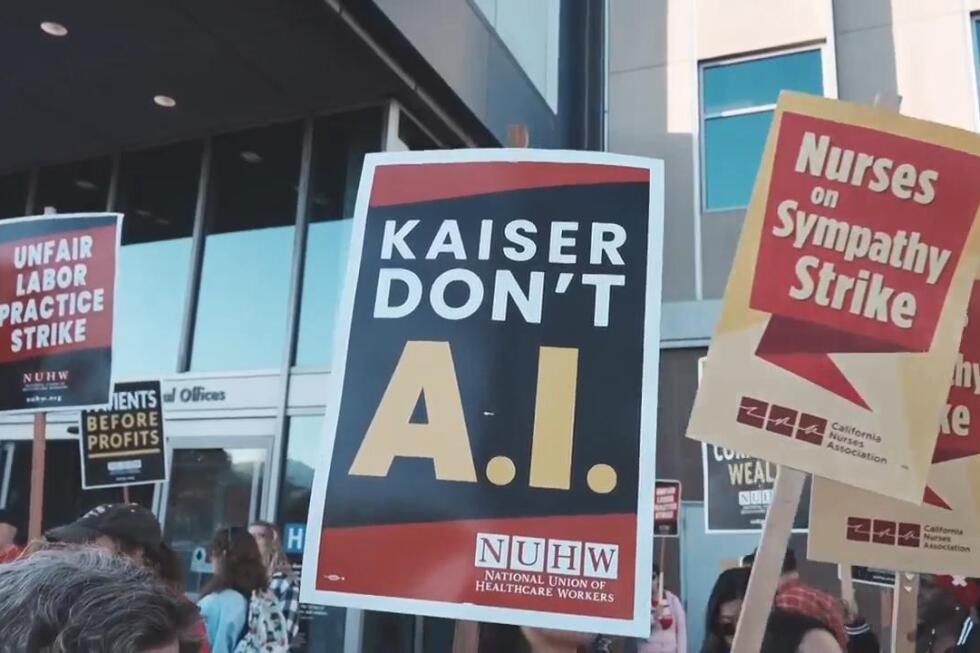
Mental health professionals at Kaiser Permanente staged a one-day strike across Northern California on Wednesday, joined by thousands of nurses, as concerns mount over the potential use of artificial intelligence in patient care.
Approximately 2,400 therapists, social workers, and psychologists who provide mental health and addiction treatment services for an estimated 4.6 million patients in the San Francisco Bay Area, Central Valley, and Sacramento regions participated in the work stoppage. They were supported by more than 23,000 Kaiser nurses who joined the strike in solidarity.
The National Union of Healthcare Workers, which represents the mental health professionals, has expressed growing concern that Kaiser might eventually replace therapists with AI technology. While Kaiser Permanente does not currently use artificial intelligence for therapy, union representatives worry that advancements in the technology could make it an attractive cost-cutting option for the healthcare provider.
“Is AI going to benefit patients? Is AI going to benefit the people that work for Kaiser Permanente? Or is AI going to benefit the bottom line of the corporation?” questioned Katy Roemer, a nurse in adult and family medicine with the California Nurses Association. “We want AI that’s transparent, that is allowing people to do their jobs.”
Kaiser Permanente has firmly denied these allegations. In a statement, the Oakland-based healthcare giant insisted that AI would not replace human assessment or make care decisions for patients. The company emphasized that all facilities remained open during the strike.
Beyond concerns about artificial intelligence, the striking healthcare professionals are also protesting what they describe as increasing workloads and diminishing resources. Dr. Emma Olsen, a psychiatrist at Kaiser in Vallejo and a union steward, highlighted management demands to reduce time spent on patient documentation and communication.
“They’re trying to take all that time away. They really just want us to be seeing people back to back to back, to be seeing more people for less time with less resources,” Olsen explained.
This dispute comes amid ongoing contract negotiations that began last summer between Kaiser and the mental health professionals. The strike represents a significant escalation in the bargaining process.
In a message sent to employees this week, Kaiser management attempted to address concerns by noting they have hired additional mental health workers. The company characterized its approach to technology differently than the striking workers, framing AI as a supportive tool rather than a replacement.
“We see technology — and AI, in particular — as a way to support you in managing your practice and provide you with tools that facilitate greater access to care and connection with patients,” stated the message from Lionel Sims, senior vice president of Human Resources at Kaiser Foundation Health Plan and Hospitals, and Priya Smith, chief employee human resources officer at The Permanente Medical Group.
The dispute unfolds against a backdrop of previous scrutiny of Kaiser’s mental health services. In 2023, the healthcare provider agreed to a substantial $200 million settlement with the California Department of Managed Health Care over violations of state mental health laws.
The strike highlights the growing tension in healthcare between technological advancement and maintaining quality patient care. As AI technologies continue to develop rapidly, healthcare providers like Kaiser Permanente are navigating how to implement these tools while addressing concerns from frontline workers about job security and patient outcomes.
For the millions of Kaiser patients across Northern California, the labor dispute raises questions about the future of mental health care delivery and the role technology will play in treatment. While facilities remained open during the one-day action, the unresolved contract negotiations suggest that further labor disruptions could be possible if the parties fail to reach an agreement.
Fact Checker
Verify the accuracy of this article using The Disinformation Commission analysis and real-time sources.

13 Comments
While AI has many potential benefits, the human touch is especially vital in sensitive areas like mental health. Kudos to these professionals for standing up for their patients and their livelihoods.
The mental health professionals’ strike is a wake-up call. AI shouldn’t be implemented hastily or without robust safeguards. Patients deserve the best possible care, which includes irreplaceable human expertise and judgment.
This strike highlights the importance of ensuring AI is implemented responsibly in healthcare to benefit both patients and providers. Transparency and dialogue between stakeholders will be crucial.
Absolutely, any AI deployment in sensitive areas like mental health should be done with extensive input from clinicians and rigorous oversight. Rushing it in as a cost-cutting measure would be unethical.
This strike highlights the complex considerations around AI in sensitive healthcare domains. While the technology has promise, deploying it responsibly to benefit both patients and providers will require extensive dialogue and safeguards.
As AI capabilities advance, it’s critical that healthcare providers thoughtfully consider the technology’s role and limitations. Striking the right balance between efficiency and quality, human-centric care will be key.
AI in healthcare is a double-edged sword. It could enhance efficiency, but also risks dehumanizing the patient experience. Kudos to these workers for fighting to preserve the human element in mental health treatment.
Interesting to see mental health professionals striking over concerns about AI’s potential impact on patient care and their jobs. It’s a complex issue – AI could have benefits but also risks that need to be carefully considered.
Kudos to these mental health professionals for taking a stand. AI should complement rather than replace human expertise in care delivery. Let’s hope Kaiser listens to their concerns.
Yes, the needs of patients must come before corporate cost-savings. Healthcare is a service, not just a business, and the human element is irreplaceable.
This strike underscores the complex challenges around AI in healthcare. While the technology has potential, it also raises valid concerns about patient privacy, ethical use, and impact on jobs. Stakeholders must work together to get it right.
This is a tricky issue – AI could enhance mental healthcare in some ways, but also poses risks if not handled carefully. Kudos to the striking workers for voicing their concerns to protect both jobs and patient wellbeing.
Interesting to see the pushback against AI in this context. Mental healthcare requires nuanced, empathetic interaction that AI may struggle to fully replicate. Balancing innovation and quality of care will be a key challenge.